“One of the seats of emotion and memory in the brain is the amygdala, he explained. When something threatens your life, this area seems to kick into overdrive, recording every last detail of the experience. The more detailed the memory, the longer the moment seems to last. “This explains why we think that time speeds up when we grow older,” Eagleman said–why childhood summers seem to go on forever, while old age slips by while we’re dozing. The more familiar the world becomes, the less information your brain writes down and the more quickly time seems to pass.”
I am a New York Times crossword puzzle constructor. →
the coercive nostalgia present in the missing information of a picture that's been copied too many times... →
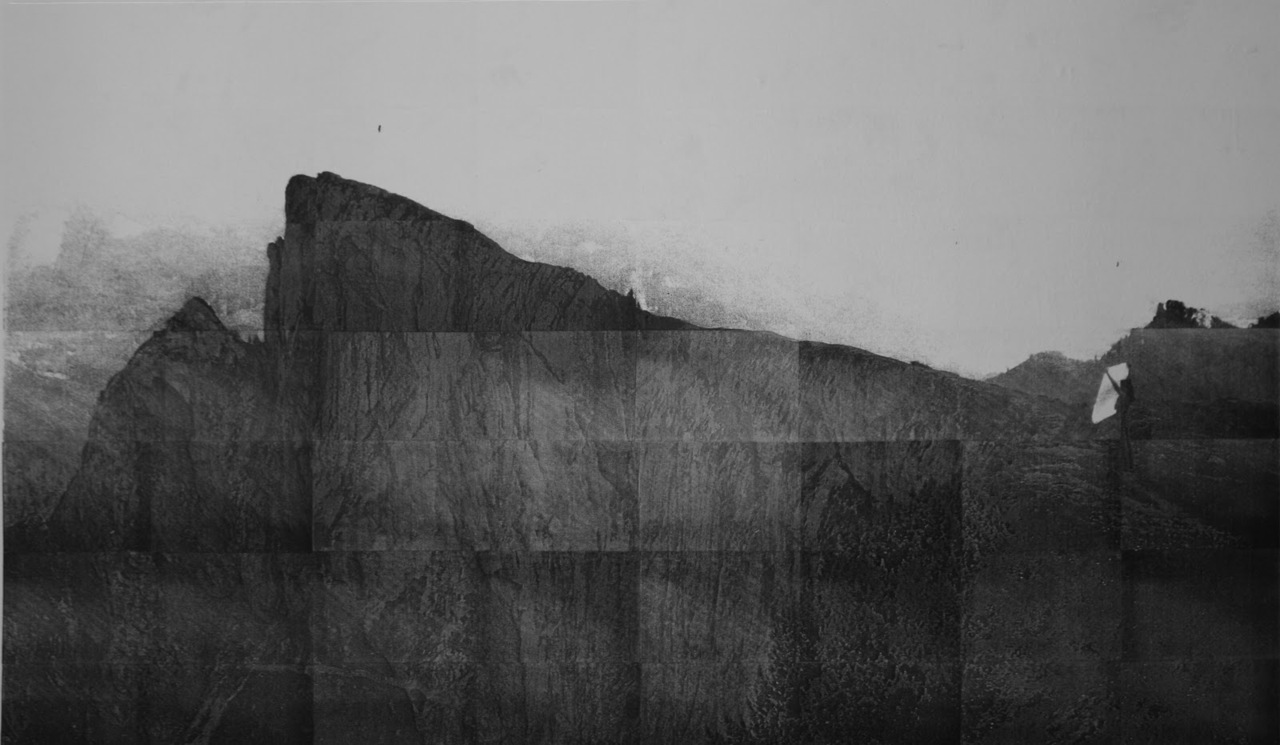
Amalia Pica Dialogue (paper and mountain). Image composed by A3 photocopies. Dimensions variable

Photographs of magnetism by Ling Meng
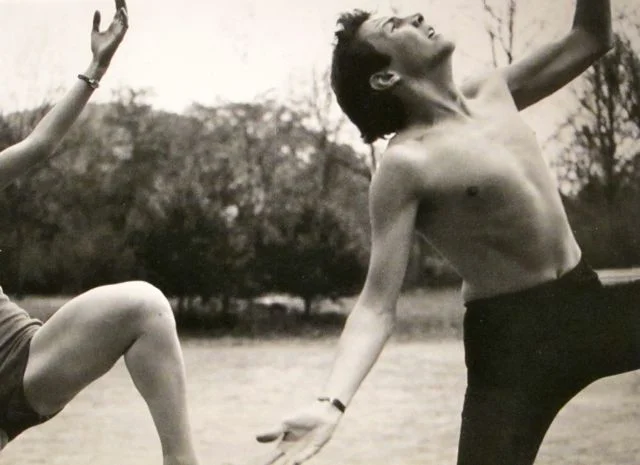
Robert Rauschenberg and Elizabeth Schmitt Jennerjahn at Black Mountain College

Alexander Gutke, The White Light of The Void, 2002
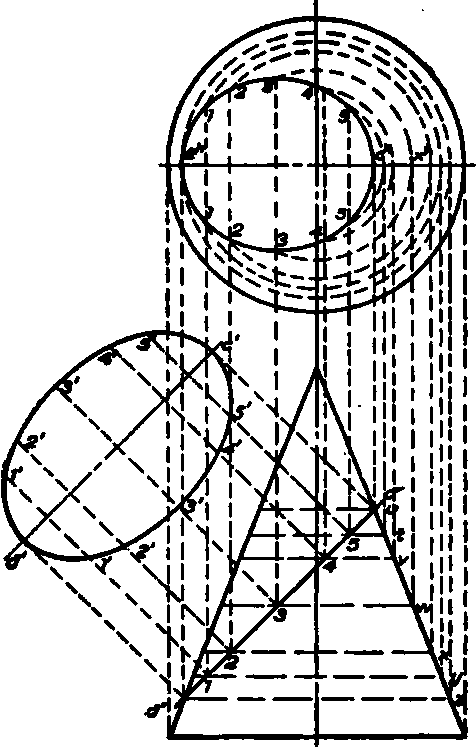
An ellipse is a plane curve that results from the intersection of a cone by a plane in a way that produces a closed curve. It is the locus of all points of the plane whose distances to two fixed points add to the same constant.
“But the oddest thing was the oval shape of the saint’s golden halo: it was like a hole into which he was disappearing head first. All the rest of the image was flat and depthless and without background, kind of blandly omnipresent - but then suddenly you got this other dimension entirely: an absence, a slipping away. When I asked Mavsek about it he told me that the visual motif was called ellipsus, but added that this motif didn’t properly belong to this type of image. For some reason, he was copying the painting twice, so there were three saints, three mountains, three oceans, goodness knows how many ships, being formed in front of me while I sat drinking coffee after coffee.”
The Living Dead: Three Films About the Power of the Past →
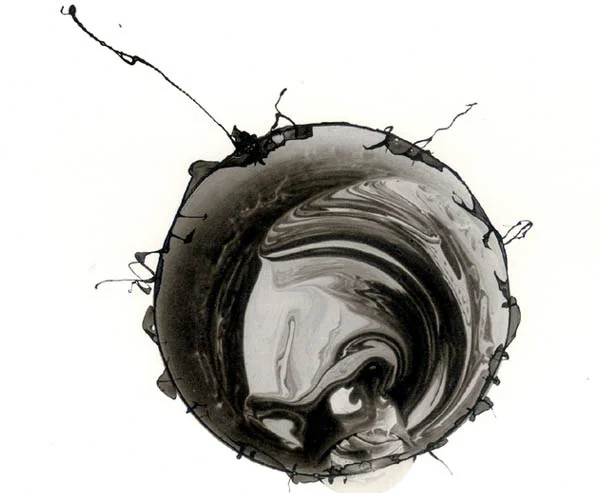
Roland Flexner, Bubble Drawings

Double Take, a film by director Johan Grimonprez and author Tom McCarthy
“Being is not full transcendence, the plenitude of the One or cosmic abundance, but rather an ellipsis, an absence, an incomprehensibly vast lack scattered with debris and detritus. Philosophy as the thinking of Being has to begin from the experience of disappointment that is at once religious (God is dead, the One is gone), epistemic (we know very little, almost nothing; all knowledge claims have to begin from the experience of limitation) and political (blood is being spilt in the streets as though it were champagne).”
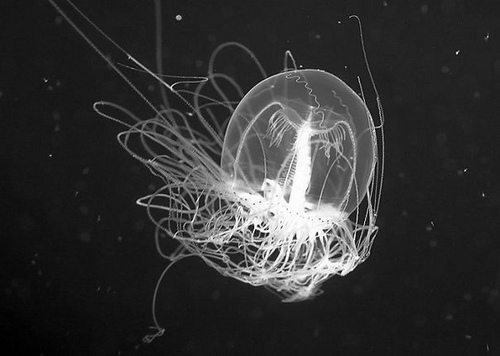
Turritopsis nutricula, the immortal jellyfish
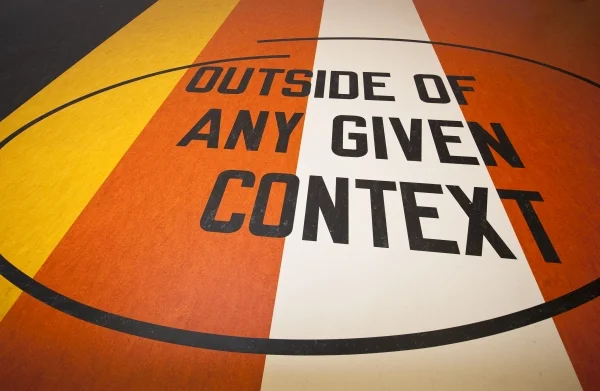
“a syntax– not, it follows, a semantics. For whereas semantics concern the production of meaning and the various processes of signification, a syntax ‘merely’ concerns the art of ordering things, of arranging and locating things (with certain orders, of both objects and concepts, tending to produce certain meanings). Here, one could discern a shared attachment to the original enterprise of art as a decidedly open-ended, non-decidable affair.
It is not so much art’s business to produce meaning (as a semantic view of art would have it), as it is to allow for various meanings to be extrapolated from it by the viewer, the visitor, he or she who wanders among art’s proverbial building blocks.”
-Dieter Roelstraete on Liam Gillick and Lawrence Weiner’s “A Syntax of Dependency”
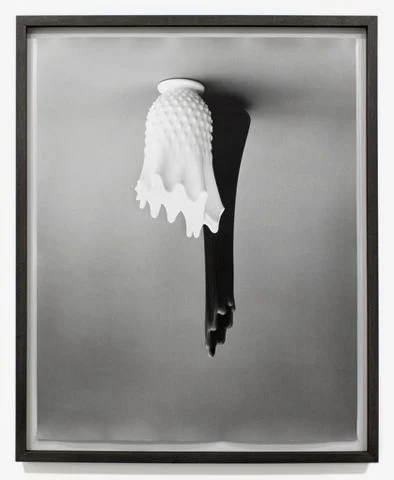
Talia Chetrit
“Scientific revolutions may be nothing more than metaphoric revolutions, in which autotelic novelties foreground the dramatization of a system in order to undermine the automatization of its reason. Paradigm shifts reveal that every axiology secretly involves a reductio ad absurdum – the anomaly of an irresistible, but inadmissible, theorem. The aporia of such a system arises paradoxically from the rigor of its logic as if its success also means its failure.”
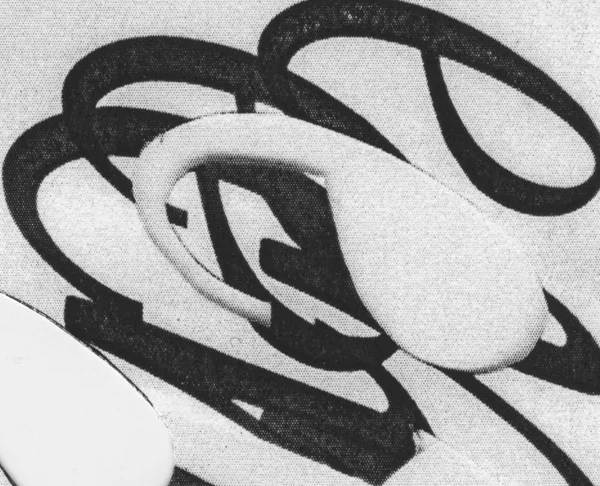
The Secret Life of Chaos →
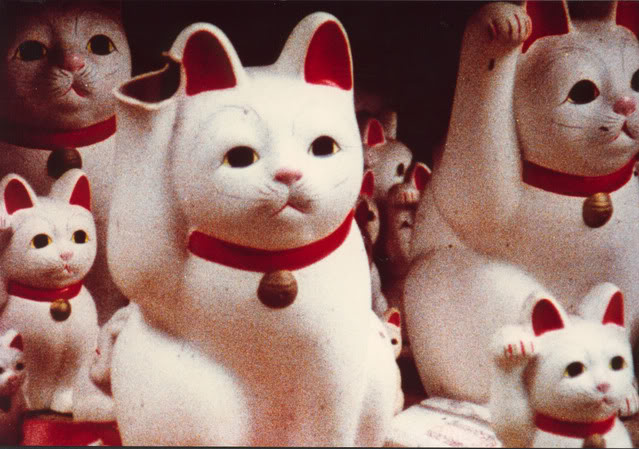
He wrote me: I will have spent my life trying to understand the function of remembering, which is not the opposite of forgetting, but rather its lining. We do not remember, we rewrite memory much as history is rewritten. How can one remember thirst?