Starting over (Taken with Instagram)
“I’ve been very interested in the last year or so in the phenomenon of disgust as an aesthetic concept. It’s interesting that the concepts of disgust and monstrosity have a strange role in a text like Aristotle’s Poetics and in Kant’s Critique of Judgment. There is a line drawn between the sublime, which is almost too much, and the monstrous which is absolutely too much, and we have to protect ourselves against the absolutely too much because if that intervenes in the aesthetic arena it will lead to disgust. And I guess at this point, the beginning of February 2012, I’m very interested in reclaiming or rethinking that extremity of affect, of disgust, in relation to monstrosity, which, of course, is a way of thinking about the entire history of the avant-garde over the last 100 years. There’s a quotation from Bacon where he’s asked about the violence of what he does and he says well I don’t think it is violent, or if it is violent it’s about thinking through a greater violence which is the violence of the screens in which we find ourselves surrounded, and it seems to me we find ourselves screened and secluded in informational cells and part of the function of art is to try and break through that. I mean Nauman says a work of art is like a blow to the back of the neck, I’d like to see a bit more of that. What that might mean? I’m not sure, but to go back to some of that physical and intellectual extremity which seems to have been lost.”
Dialetheism →
“Left of Standing
His precision and accuracy
suggesting clean cuts, leaving
a vacancy, a slightly physical
depression as though I had been
in a vaguely uncomfortable place
for a not long but undeterminable
period; not waiting.
Standing or Left Standing
His preciseness and acuity left
small cuts on the tips of my
fingers or across the backs of
my hands without any need to
sit or otherwise withdraw.”
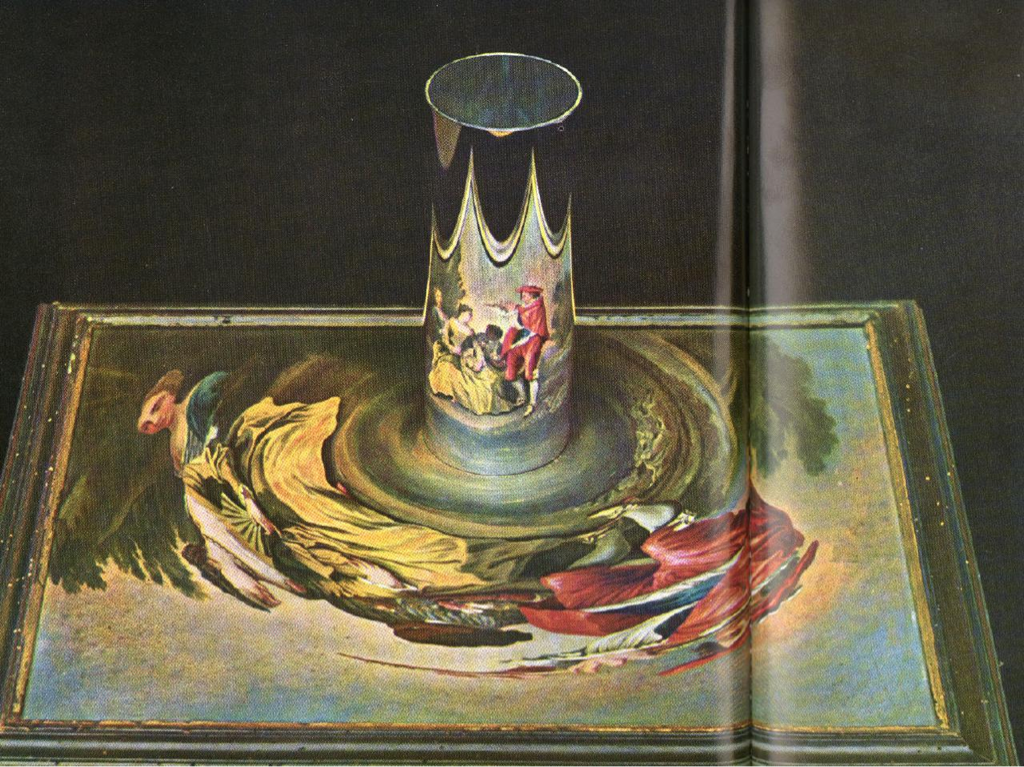
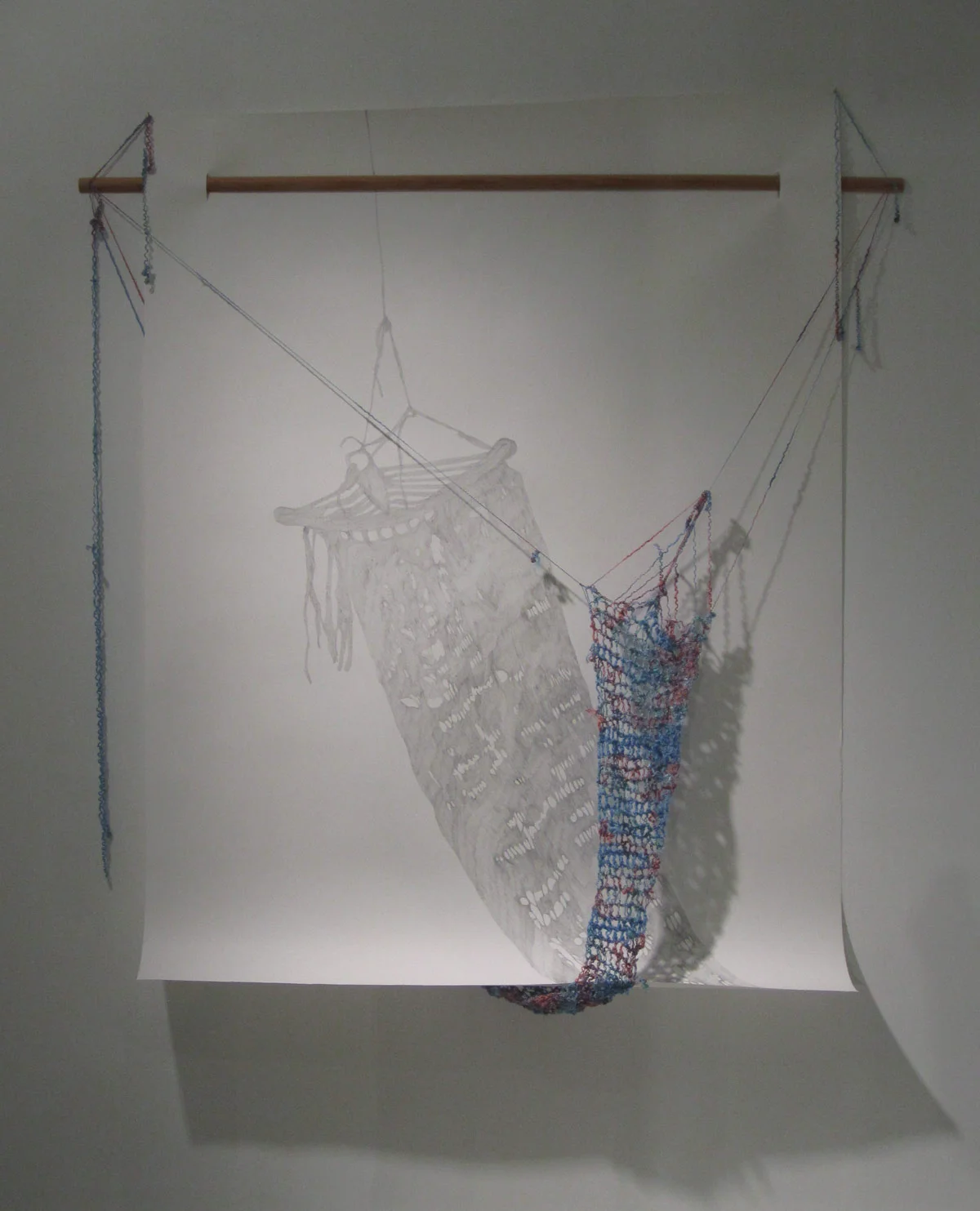
Samantha Roth
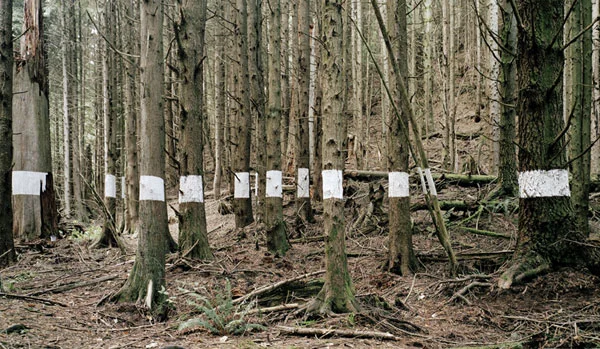
Chris Engman

John Houck

Shannon Ebner, Leaning Tree, 2002
A Whole Lot of Nothing →
“I think this is another approach to the question we once formulated like this: how can we discover the obscure without exposing it to view? What would this experience of the obscure, in which the obscure offered itself in its obscurity, be?Yes, we were seeking then to circumscribe the affirmation of impossibility, this non-power that would not be a simple negation of power. And in asking ourselves what thought it might be that could not be thought in the mode of power and of appropriating comprehension, we came to say that ‘impossibility is the passion of the Outside itself,’ and also that ‘impossibility is the experience of non- mediate presence.’ A response (if to give affirmative force to a question is to respond) that philosophy has the right to despair of.”
“It comes back to the issue of overinterpretation. Human cognition is geared toward finding patterns; that’s what we do, and we do it well. As infants, we track the changing conditional probabilities of sounds in human speech, which allows us to learn where the boundaries are between words. As children we learn new words at a rate of several per day. We hear the patterns in music, see the objects in images, understand the logic of a story in a sequence of sentences. We can’t help ourselves. We even do it when it isn’t appropriate. Sure, we learn to recognize the faces of our family members and our friends. But we also see faces where there aren’t any, in the moon, in clouds. We see causality where there is only coincidence—when a supplicant’s prayer is answered, or when the rain dance is followed by rain. And we hear coherent language use where there are only snippets of canned text.”
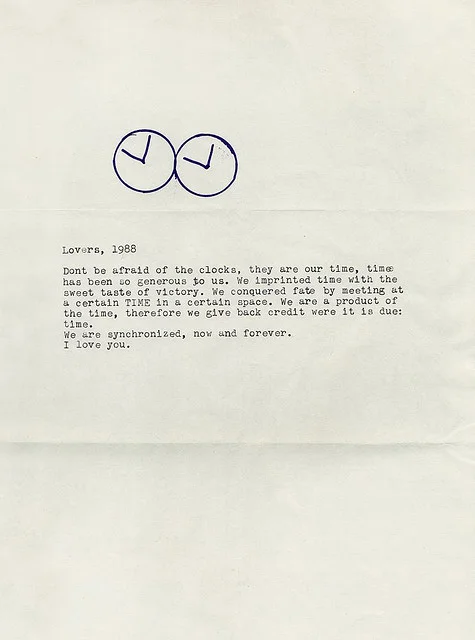
“I am told that the present, the specious present of the psychologists, lasts from a few seconds to a minute fraction of a second; that is the duration of the history of the universe. In other words, there is no such history, just as a man has no life; not even one of his nights exists; each moment we live exists, but not their imaginary combination. The universe, the sum of all things, is a collection no less ideal than that of all the horses Shakespeare dreamt of – one, many, none? – between 1592 and 1594. I add: if time is a mental process, how can thousands of men – or even two different men – share it?”

4 years of evolution in 40 seconds