• SELECTED PROJECTS
  • NEWS
  • NOTES
  • CV
  • CONTACT

Cody Trepte

  • SELECTED PROJECTS
  • NEWS
  • NOTES
  • CV
  • CONTACT

Cookie-Cutter Holes

On Nov. 24, 1984, the Spokane, Wash., Spokesman-Review reported the discovery of a massive chunk of earth, 10 feet long by 7 feet wide, that had somehow been plucked from the ground and put down, right side up and intact, 73 feet away. Roots had been torn apart rather than cut, and, strangely, the debris between the hole and the slab traced an arc rather than a straight line.

“All we know for sure is that this puzzle piece of earth is 73 feet away from the hole it came out of,” said geologist Greg Behrens.

Similar “cookie-cutter holes” have been observed elsewhere; the earliest known reference is in the Royal Frankish Annals of the 8th century:

In the land of the Thuringians, in the neighborhood of a river, a block of earth fifty feet long, fourteen feet wide, and a foot and a half thick, was cut out, mysteriously lifted, and shifted twenty-five feet from its original location.

No doubt there’s a mundane explanation for this, but for now no one knows what it is.

Futility Closet

Sunday 05.10.15
Posted by Cody Trepte
 
When puzzling screw-shaped structures (below) were unearthed in Nebraska in the 1890s they were known as “devil’s corkscrews” and attributed to freshwater sponges or some sort of coiling plant. They were finally recognized as the burrows of prehis…

When puzzling screw-shaped structures (below) were unearthed in Nebraska in the 1890s they were known as “devil’s corkscrews” and attributed to freshwater sponges or some sort of coiling plant. They were finally recognized as the burrows of prehistoric beavers only when a fossilized specimen, Palaeocastor, was found inside one.

Futility Closet

Sunday 05.10.15
Posted by Cody Trepte
 
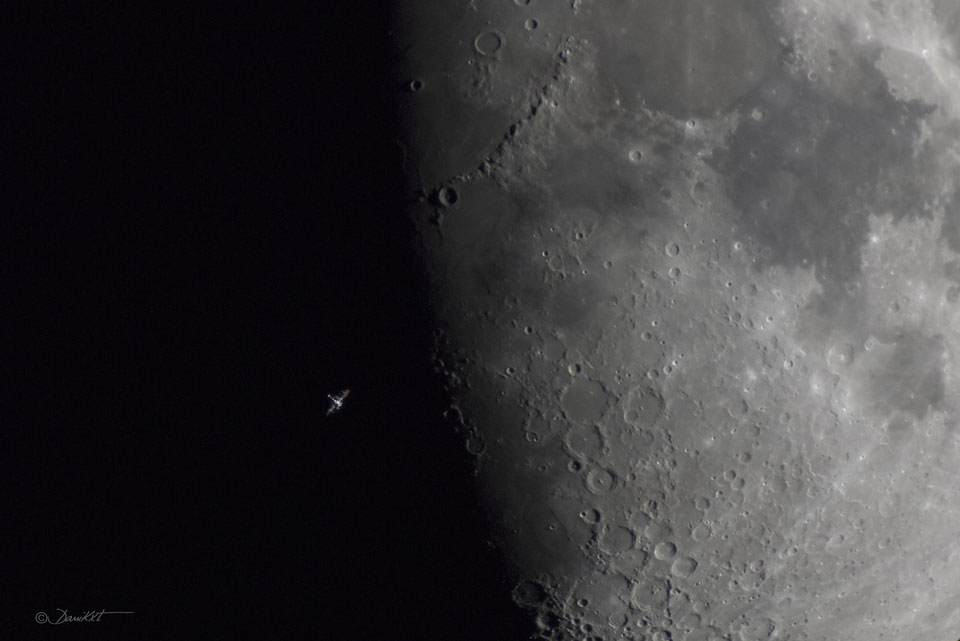
International Space Station in front of the moon

International Space Station in front of the moon

Sunday 05.10.15
Posted by Cody Trepte
 
Scotoma

Scotoma

Friday 12.26.14
Posted by Cody Trepte
 
Friday 12.26.14
Posted by Cody Trepte
 
Friday 12.26.14
Posted by Cody Trepte
 
tumblr_nfz4kwlCz01qbgkzxo1_1280.jpg
Tuesday 12.02.14
Posted by Cody Trepte
 
tumblr_nfz4luwOmq1qbgkzxo1_1280.jpg
Tuesday 12.02.14
Posted by Cody Trepte
 
“Nothing is lost in translation. Everything was always already lost, long before we arrived.

Translation is its own undoing. A feedback loop. A Möbius strip or trip. An unwriting of the original, which is never the same as itself anyway. A writing of the unoriginal translation.

Translation is an asymptote: no matter how close we try to get, there’s always a space between the two bodies and that is the space where we live. The space where we transpose, or are transposed.”
— A Manifesto for Ultratranslation from Antena
Sunday 11.23.14
Posted by Cody Trepte
 
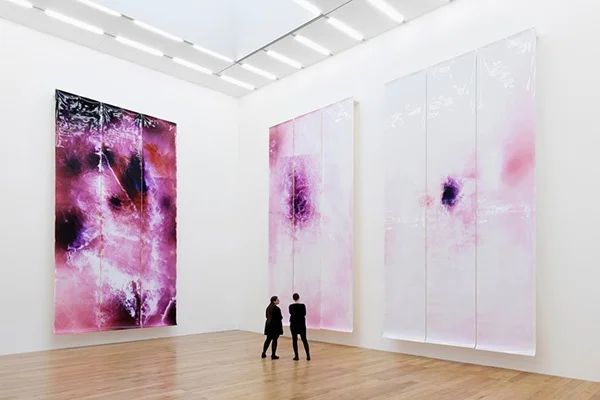
Raphael Hefti at Nottingham Contemporary

Raphael Hefti at Nottingham Contemporary

Friday 11.21.14
Posted by Cody Trepte
 
comet 67P/Churyumov–Gerasimenko

comet 67P/Churyumov–Gerasimenko

Wednesday 11.12.14
Posted by Cody Trepte
 
Sometimes your eclipse viewing goes bad in an interesting way. While watching and photographing last Thursday’s partial solar eclipse, a popular astronomy blogger suffered through long periods of clouds blocking the Sun. Unexpectedly, however,…

Sometimes your eclipse viewing goes bad in an interesting way. While watching and photographing last Thursday’s partial solar eclipse, a popular astronomy blogger suffered through long periods of clouds blocking the Sun. Unexpectedly, however, a nearby cloud began to show a rare effect: iridescence. Frequently part of a more familiar solarcorona effect, iridescence is the diffraction of sunlight around a thin screen of nearly uniformly-sized water droplets. Different colors of the sunlight become deflected by slightlydifferent angles and so come to the observer from slightly different directions. This display, featured here, was quite bright and exhibited an unusually broad range of colors. On the right, the contrails of an airplane are also visible.

from: APOD (NASA)

Thursday 10.30.14
Posted by Cody Trepte
 
“

THE BELIEVER: That’s interesting – I would have imagined the opposite: that translatability would be the condition of great writing – that what it means to have written something great is that there is something so powerful in it that can communicate even through the scrim of the worst translation.


ADAM THIRLWELL: Maybe novels cope better than poetry with being mutilated and deformed. Their style functions differently. The real problem is how much weight to put on the loss, or on the inevitability of loss. I think there are very many emotional or neurotic aspects to this. It’s often as if some people want to say that if something isn’t a pure substitute for the original, then it’s a failure – whereas surely in fact it’s just a likeness, and it would only be hysterical to attack a likeness for not being a perfect replacement. And one thing that does seem true is that often linguistic turns and tropes that can’t be repeated in a new language turn out not to be so crucial to a story’s stylistic essence: the essence turns out to be much more a cloud and mobile. It’s a vaster thing than maybe we used to think, a novel’s style. That’s one possible conclusion


THE BELIEVER: Thinking about it as “a likeness” is very relaxing. That comparison had never occurred to me. Did you think about it like that always, or are you only thinking about it like that since the project?


ADAM THIRLWELL: In fact, I’m stealing this idea from David Bellos, a Princeton professor and, more importantly, translator of Georges Perec and Ismail Kadare. Around the time I was first putting this project together, the NYT asked me to review his new book on translation: Is That A Fish In Your Ear? and one of his arguments is that we have to stop thinking of translation as substitution. “A translation is more like a portrait in oils.” I remember I loved this analogy so much that I wanted to write an extra digressive paragraph using Picasso – there’s this great thing Picasso once told Brassai which I’ve always loved: ‘I always aim for likeness. A painter has to observe nature, but must never confuse it with painting. It can be translated into painting only with signs.’ And I remember thinking, I want the Picasso of translation! The Bellos analogy is so good because it neatly shows how much more flexibility there could be in the way people think about translations: each one is just looking for equivalent signs, not perfect reproductions.

”
— Adam Thirdwell in conversation with The Believer on issue 42 of McSweeney’s
Monday 10.13.14
Posted by Cody Trepte
 
“

… the history of physics is littered with metaphorical leaps. Einstein grasped relativity while thinking about moving trains. Arthur Eddington compared the expansion of the universe to an inflated balloon. James Clerk Maxwell thought of magnetic fields as little whirlpools in space, which he called vortices. The Big Bang was just a cosmic firecracker. Schrödinger’s cat, trapped in a cosmic purgatory, helped illustrate the paradoxes of quantum mechanics. It’s hard to imagine string theory without its garden hose.


These scientific similes might seem like quaint oversimplifications, but they actually perform a much more profound function. As the physicist and novelist Alan Lightman writes, “Metaphor in science serves not just as a pedagogical device, but also as an aid to scientific discovery. In doing science, even though words and equations are used with the intention of having precise meaning, it is almost impossible not to reason by physical analogy, not to form mental pictures, not to imagine balls bouncing and pendulums swinging.” The power of a metaphor is that it allows scientists imagine the abstract concept in concrete terms, so that they can grasp the implications of their mathematical equations. The world of our ideas is framed by the only world we know.


But relying on metaphor can also be dangerous, since every metaphor is necessarily imperfect. (As Thomas Pynchon put it, “The act of metaphor is a thrust at truth and a lie, depending on where you are.”) The strings of the universe might be like a garden hose, but they are not a garden hose. The cosmos isn’t a plastic balloon. When we chain our theories to ordinary language, we are trespassing on the purity of the equation. To think in terms of analogies is to walk a tightrope of accuracy.

”
— The Future of Science…Is Art? by Jonah Lehrer in Seed Magazine
Tuesday 09.02.14
Posted by Cody Trepte
 
“Silence goes faster backwards. Three times. Twice, I repeat.”
— from Cocteau’s Orpheus
Saturday 08.23.14
Posted by Cody Trepte
 
“Literature, art, and philosophy represent different forms of intelligence – forms that, in the end, can probably be traced back to a single practice: the focused contemplation of the starry sky that seeks out patterns in it.”
— Nicolas Bourriaud on the INS
Saturday 08.23.14
Posted by Cody Trepte
 
Erlea Maneros Zabala

Erlea Maneros Zabala

Friday 08.22.14
Posted by Cody Trepte
 
“Short ideas, repeated, massage the brain”
— Robert Ashley
Thursday 07.10.14
Posted by Cody Trepte
 
Why would a cloud appear to be different colors? A relatively rare phenomenon known as iridescent clouds can show unusual colors vividly or a whole spectrum of colors simultaneously. These clouds are formed of small water droplets of nearly uniform …

Why would a cloud appear to be different colors? A relatively rare phenomenon known as iridescent clouds can show unusual colors vividly or a whole spectrum of colors simultaneously. These clouds are formed of small water droplets of nearly uniform size. When the Sun is in the right position and mostly hidden by thick clouds, these thinner clouds significantly diffract sunlight in a nearly coherent manner, with different colors being deflected by different amounts. Therefore, different colors will come to the observer from slightly different directions. Many clouds start with uniform regions that could show iridescence but quickly become too thick, too mixed, or too far from the Sun to exhibit striking colors. The above iridescent cloud was photographed in 2009 from the Himalayan Mountains in Nepal, behind the 6,600-meter peak named Thamserku.

Source: http://apod.nasa.gov/apod/astropix.html
Tuesday 07.08.14
Posted by Cody Trepte
 
“

For us, both as linguists and as ordinary word-users, the meaning of any linguistic sign is its translation into some further, alternative sign, especially a sign “in which it is more fully developed” as Peirce, the deepest inquirer into the essence of signs, insistently stated. The term “bachelor” may be converted into a more explicit designation, “unmarried man,” whenever higher explicitness is required. We distinguish three ways of interpreting a verbal sign: it may be translated into other signs of the same language, into another language, or into another, nonverbal system of symbols.
These three kinds of translation are to be differently labeled:
1. Intralingual translation or rewording is an interpretation of verbal signs by means of other signs of the same language.
2. Interlingual translation or translation proper is an interpretation of verbal signs by means of some other language.
3. Intersemiotic translation or transmutation is an interpretation of verbal signs by means of signs of nonverbal sign systems.


The intrallingual translation of a word uses either another, more or less synonymous, word or resorts to a circumlocution. Yet synonymy, as a rule, is not complete equivalence: for example, “every celibate is a bachelor, but not every bachelor is a celibate.” A word or an idiomatic phrase-word, briefly a code-unit of the highest level, may be fully interpreted only by means of an equivalent combination of code-units, i.e., a message referring to this code-unit: “every bachelor is an unmarried man, and every unmarried man is a bachelor” or “every celibate is bound not to marry, and everyone who is bound not to marry is a celibate?’


…


Syntactic and morphological categories, roots, and affixes, phonemes and their components (distinctive features)–in short, any constituents of the verbal code–are confronted, juxtaposed, brought into contiguous relation according to the principle of similarity and contrast and carry their own autonomous signification. Phonemic similarity is sensed as semantic relationship. The pun, or to use a more erudite, and perhaps more precise term–paronomasia, reigns over poetic art, and whether its rule is absolute or limited, poetry by definition is untranslatable. Only creative transposition is possible: either intralingual transposition–from one poetic shape into another, or interlingual transposition–from one language into another, or finally intersemiotic transposition–from one system of signs into another, e.g., from verbal art into music, dance, cinema, or painting.

”
— Roman Jakobson’s On Linguistic Aspects of Translation
Monday 07.07.14
Posted by Cody Trepte
 
Newer / Older