• SELECTED PROJECTS
  • NEWS
  • NOTES
  • CV
  • CONTACT

Cody Trepte

  • SELECTED PROJECTS
  • NEWS
  • NOTES
  • CV
  • CONTACT

It's raining but I don't believe that it is raining →

Friday 02.15.13
Posted by Cody Trepte
 

Colorless green ideas sleep furiously

Friday 02.15.13
Posted by Cody Trepte
 

Buffalo buffalo Buffalo buffalo buffalo buffalo Buffalo buffalo →

Friday 02.15.13
Posted by Cody Trepte
 

from A New Refutation of Time

“I want to set down here an experience which I had some nights ago: a trifle too evanescent and ecstatic to be called an adventure, too irrational and sentimental to be called a thought. It consists of a scene and its word: a word already stated by me, but not lived with complete dedication until then. I shall now proceed to give its history, with the accidents of time and place which were its declaration.

"I remember it as follows. The afternoon preceding that night, I was in Barracas: a locality not visited by my habit and whose distance from those I later traversed had already lent a strange flavor to that day. The evening had no destiny at all; since it was clear, I went out to take a walk and to recollect after dinner. I did not want to determine a route for my stroll; I tried to attain a maximum latitude of probabilities in order not to fatigue my expectation with the necessary foresight of any one of them. I managed, to the imperfect degree of possibility, to do what is called walking at random; I accepted, with no other conscious prejudice than that of avoiding the wider avenues or streets, the most obscure invitations of chance. However, a kind of familiar gravitation led me farther on, in the direction of certain neighborhoods, the names of which I have every desire to recall and which dictate reverence to my heart. I do not mean by this my own neighborhood, the precise surroundings of my childhood, but rather its still mysterious environs: an area I have possessed often in words but seldom in reality, immediate and at the same time mythical. The reverse of the familiar, its far side, are for me those penultimate streets, almost as effectively unknown as the hidden foundations of our house or our invisible skeleton. My progress brought me to a corner. I breathed in the night, in a most serene holiday from thought. The view, not at all complex, seemed simplified by my tiredness. It was made unreal by its very typicality. The street was one of low houses and though its first meaning was one of poverty, its second was certainly one of contentment. It was as humble and enchanting as anything could be. None of the houses dared open itself to the street; the fig tree darkened over the corner; the little arched doorways – higher than the taut outlines of the walls – seemed wrought from the same infinite substance of the night. The sidewalk formed an escarpment over the street; the street was of elemental earth, the earth of an as yet unconquered America. Farther down, the alleyway, already open to the pampa, crumbled into the Maldonado. Above the turbid and chaotic earth, a rose-colored wall seemed not to house the moonlight, but rather to effuse an intimate light of its own. There can be no better way of naming tenderness than that soft rose color.

"I kept looking at this simplicity. I thought, surely out loud: This is the same as thirty years ago… I conjectured the date: a recent time in other countries but now quite remote in this changeable part of the world. Perhaps a bird was singing and for it I felt a tiny affection, the same size as the bird; but the most certain thing was that in this now vertiginous silence there was no other sound than the intemporal one of the crickets. The easy thought ‘I am in the eighteen-nineties’ ceased to be a few approximate words and was deepened into a reality. I felt dead, I felt as an abstract spectator of the world; an indefinite fear imbued with science, which is the best clarity of metaphysics. I did not think that I had returned upstream on the supposed waters of Time; rather I suspected that I was the possessor of a reticent or absent sense of the inconceivable word eternity. Only later was I able to define that imagination.

"I write it now as follows: That pure representation of homogeneous objects – the night in serenity, a limpid little wall, the provincial scent of the honeysuckle, the elemental earth – is not merely identical to the one present on that corner so many years ago; it is, without resemblances or repetitions, the very same. Time, if we can intuitively grasp such an identity, is a delusion: the difference and inseparability of one moment belonging to its apparent past from another belonging to its apparent present is sufficient to disintegrate it.

"It is evident that the number of such human moments is not infinite. The elemental ones – those of physical suffering and physical pleasure, those of the coming of sleep, those of the hearing of a piece of music, those of great intensity or great lassitude – are even more impersonal. Aforehand I derive this conclusion: life is too poor not to be immortal as well. But we do not even have the certainty of our poverty, since time, which is easily refutable in sense experience, is not so in the intellectual, from whose essence the concept of succession seems inseparable. Thus shall remain as an emotional anecdote the half-glimpsed idea and as the confessed irresolution of this page the true moment of ecstasy and possible suggestion of eternity with which that night was not parsimonious for me.”

Friday 02.15.13
Posted by Cody Trepte
 

hy·pos·ta·tize

verb (used with object):
to treat or regard (a concept, idea, etc.) as a distinct substance or reality.

Thursday 02.14.13
Posted by Cody Trepte
 

A thought experiment

Consider a small, spatially finite possible world that is divided into three zones, A, B, and C. In Zone A, there is a complete freeze — a cessation of all change — for one hour every 2 years. These local freezes in Zone A are preceded by a short period in which every object in A takes on a reddish glow (observable to the occupants of all three zones), while at the same time a temporary force field develops at the boundary of Zone A, preventing anything from entering or exiting that zone during the freeze. While the freeze in Zone A is taking place, Zone A appears to those in Zones B and C to be pitch black, since no light can enter or exit the frozen zone; but as soon as the local freeze in Zone A is over, the people in the other two zones can again see everything in Zone A, and can in fact see those things resuming their normal behaviors without missing a beat. To those who remain in Zone A for the freeze, it appears that the reddish glowing and the development of the force field are immediately followed, not by any cessation of change, but, instead, by a large number of sudden and discontinuous changes in the other two zones. 


Meanwhile, In Zone B there is a similar freeze for one hour every 3 years, and in Zone C there is a freeze for one hour every 5 years. The inhabitants of this strange world quickly become aware of the local freezes, and they have no trouble calculating the “freeze function” for each of the three zones. What’s more, they also calculate that there is a global freeze — a period during which each one of the three zones undergoes a local freeze — exactly once every 30 years. Whenever a global freeze occurs, of course, no one is able to see any frozen objects or blacked-out zones, since everyone and everything is frozen at the same time. But the reddish glowing and the development of temporary force fields that precede each world-wide freeze are observable to everyone; and so the global freeze times come to be celebrated by “empty time parties” all over the world. 

No doubt the inhabitants of this unusual world could come up with a theory that explains the local freezes in a way that doesn’t posit any empty time. For they could theorize that in Zone A there is a local freeze every two years, except for the 30th year, when there is no freeze; and similarly for the other zones. But such a theory would involve freezing functions that are more complicated than those that entail a global freeze every 30 years. 

What is this thought experiment supposed to show? Well, it can’t be taken to show that global freezes are possible, because (at least the way the story has been told here) they are simply a stipulated detail of the story, and we can’t show that something is possible merely by stipulating that it is the case in some possible world. What the thought experiment does seem to show, however, is that it is possible for rational beings to have at least some evidence for the existence of periods of empty time in their world. For we can describe the possible world of the thought experiment in a neutral way that specifies how things in the world appear to its denizens, without specifying whether the real freeze functions for Zones A, B, and C are the simpler ones described above that entail a global freeze every 30 years or the more complicated ones that do not have that entailment. And a possible world that appears this way to its inhabitants is surely a world in which those inhabitants have some reason to take seriously the possibility that there are periods of empty time in their world, that they know when those periods occur, and even that they know exactly how long the periods of empty time last.
Wednesday 02.13.13
Posted by Cody Trepte
 
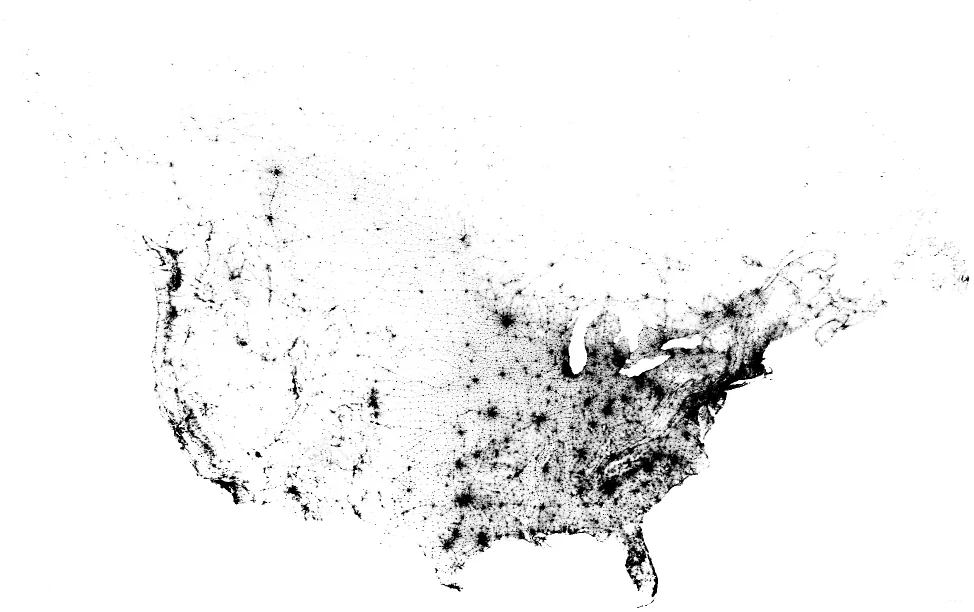
Census Dotmap - 2010

Census Dotmap - 2010

Wednesday 01.23.13
Posted by Cody Trepte
 
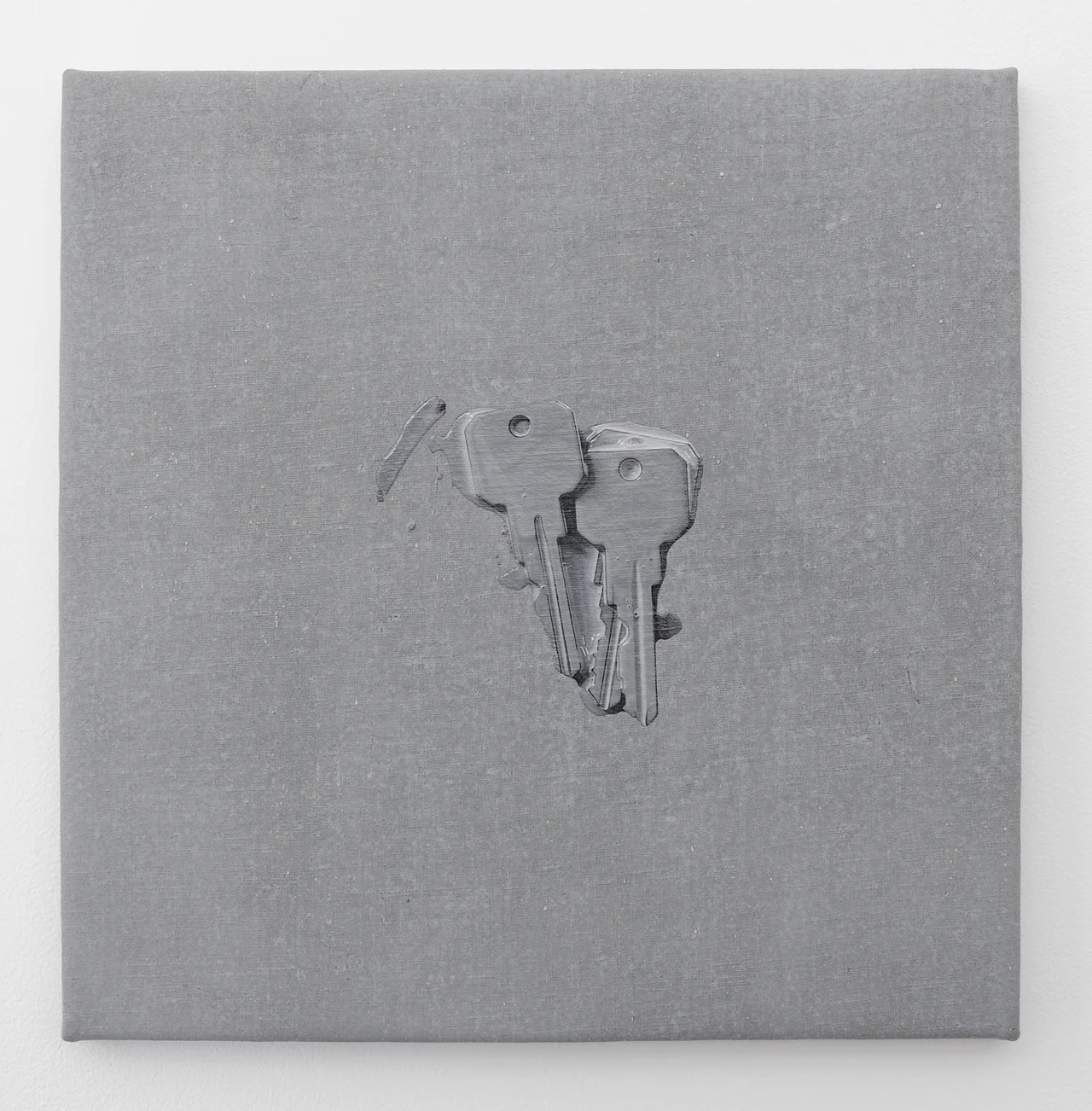
R. H. Quaytman Passing Through The Opposite of What It Approaches, Chapter 25, 2012

R. H. Quaytman Passing Through The Opposite of What It Approaches, Chapter 25, 2012

Wednesday 01.23.13
Posted by Cody Trepte
 

April 30, 1883 (Tomato and Thistle) - Damon Zucconi →

Tuesday 01.22.13
Posted by Cody Trepte
 
3-D snow

3-D snow

Thursday 01.17.13
Posted by Cody Trepte
 

Only Parts Of Us Will Ever Touch Parts Of Others

Tuesday 12.25.12
Posted by Cody Trepte
 

In Memoriam, J.F.K.

This bullet is an old one. 


In 1897, it was fired at the president of Uruguay by a young man from Montivideo, Avelino Arredondo, who had spent long weeks without seeing anyone so that the world might know that he acted alone. Thirty years earlier, Lincoln had been murdered by that same ball, by the criminal or magical hand of an actor transformed by the words of Shakespeare into Marcus Brutus, Caesar’s murderer. In the mid-seventeenth century, vengeance had employed it for the assassination of Sweden’s Gustavus Adolphus, in the midst of the public hecatomb of a battle. 

In earlier times, the bullet had been other things, because Pythagorean metempsychosis is not reserved for humankind alone. It was the silken cord given to viziers in the East, the rifles and bayonets that cut down the defenders of the Alamo, the triangular blade that slit a queen’s throat, the wood of the Cross and the dark nails that pierced the flesh of the Redeemer, the poison kept by the Carthaginian chief in an iron ring on his finger, the serene goblet that Socrates drank down one evening. 

In the dawn of time it was the stone that Cain hurled at Abel, and in the future it shall be many things that we cannot even imagine today, but that will be able to put an end to men and their wondrous, fragile life.

Jorge Luis Borges
Friday 12.14.12
Posted by Cody Trepte
 

Evolution of the most common English words and phrases over the centuries →

Friday 12.14.12
Posted by Cody Trepte
 
Thursday 12.06.12
Posted by Cody Trepte
 
Thursday 12.06.12
Posted by Cody Trepte
 
ought thing

ought thing

Wednesday 12.05.12
Posted by Cody Trepte
 

Futility Closet →

Tuesday 11.27.12
Posted by Cody Trepte
 
tumblr_md8rgjeTAm1qbgkzxo1_500.jpg
Friday 11.09.12
Posted by Cody Trepte
 
tumblr_md8rfdxt3J1qbgkzxo1_1280.jpg
Friday 11.09.12
Posted by Cody Trepte
 
Paul Sietsema

Paul Sietsema

Tuesday 11.06.12
Posted by Cody Trepte
 
Newer / Older