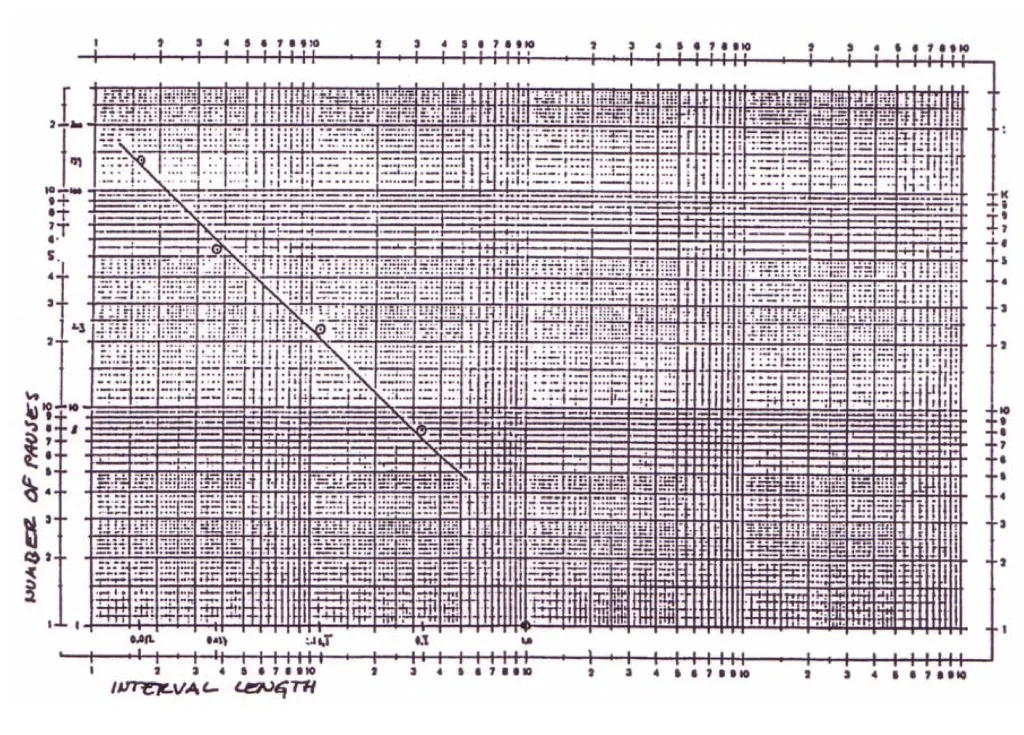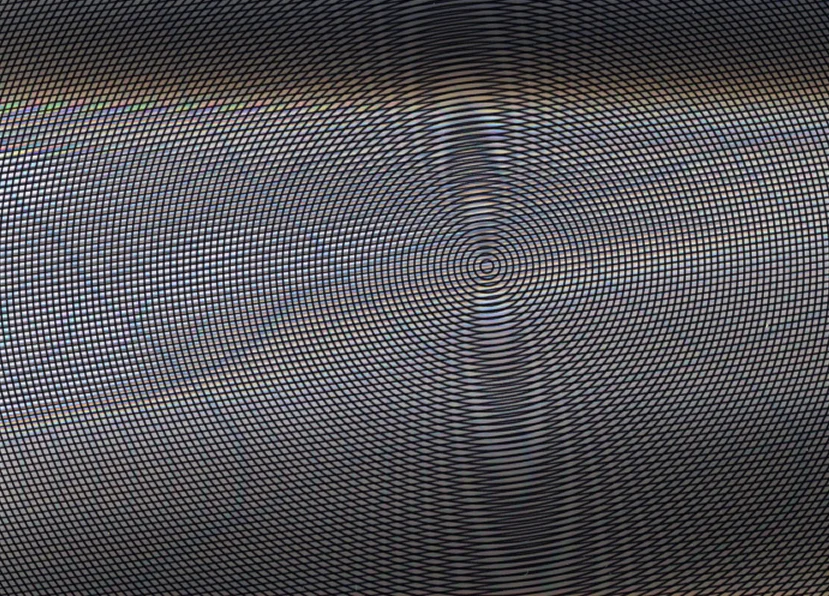
“PP”: [“For”, “From”, “after”, “as”, “at”, “before”, “by”, “for”, “from”, “in”, “into”, “like”, “of”, “to”], “DATE”: [“change”, “circle”, “configuration”, “cube”, “discovered”, “extruded”, “form”, “hexagon”, “nonagon”, “paraboloid”, “sameness”, “sure”, “synchronicity”, “yet”], “MONEY”: [“correct”], “PERCENT”: [“: nonagon”], “VP”: [“Looking”, “Morphing”, “appear”, “appears”, “appears to contain”, “are parsed and delineated”, “are synchronized”, “are widely varying”, “becomes”, “being extruded”, “blend”, “create”, “ebb”, “exists”, “have blended turning”, “have happened”, “hold”, “is”, “is correct”, “is emerging”, “is still defined”, “lacks”, “maintain”, “multiplying”, “paraboloid”, “seem”, “seem to change”, “seems”, “sees”, “stretched”, “stretching”, “to be discovered”, “to form”, “to think”, “turns”, “watching”, “would have happened”], “PERSON”: [“forms”, “forwards”], “DURATION”: [“form”, “several repetitions”, “stretched”, “structure exists”], “CARDINAL”: [“one”, “s”, “simultaneously”], “LOCATION”: [“A”, “An”, “Distortions”, “Initially”, “It”, “Looking”, “Morphing”, “Some”, “Still”, “The”, “There”, “They”, “Which”, “before”, “circle”, “closer”, “course”, “cube”, “form”, “happened”, “however”, “hypercube”, “infinity”, “line”, “once”, “particles”, “space”, “waves”], “MEASURE”: [“– texture”, “neighbor \u2019 s lines”], “NP”: [“– texture”, “A fact”, “A square”, “An identical structure”, “Distortions”, “I”, “It”, “Some structures”, “The articulation”, “There”, “They”, “Which”, “a circle”, “a cube”, “a hexagon”, “a hypercube”, “a line”, “a return”, “a sameness”, “a scaffolding”, “a scaffolding made”, “a series”, “a simple circle”, “a simpler configuration”, “a square”, “all”, “all configurations”, “all together and all”, “an infinity”, “another form”, “backwards”, “change”, “course”, “descriptions”, “difference”, “each”, “ebb”, “first”, “flat”, “flow”, “form”, “forms”, “forwards”, “it”, “its pristine fractal form”, “itself”, “lines”, “m sure”, “mark”, “most”, “movement”, “no discernible rhythm”, “no order”, “nonagon”, “nothing”, “one form”, “other instances”, “particles”, “repeating forms”, “s lines”, “s neighbor”, “several repetitions”, “shift”, “small lines”, “some surface”, “space”, “sure”, “synchronicity”, “texture”, “that”, “the”, “the changing forms”, “the constellation”, “the coordinates”, “the form”, “the individual forms”, “the limitations”, “the original”, “the outside they”, “the perspective”, “the possibility”, “the previous cube”, “the”, “there”, “these figures”, “they”, “they blend”, “this time”, “waves”, “what”], “ORGANIZATION”: [“fact”, “form”, “original”]}
“For every language there is a frontier, the crossing of which is strictly prohibited by that language’s implicit set of injunctions, yet the frontier is frequently crossed. Such an act of crossing entails a paradox. On the one hand, language’s very existence is predicated on the impossibility of saying everything (the existence of grammar implies the existence of nongrammar, consequently, there is an implied exclusion: “This cannot be said”). On the other hand, there is nothing that cannot be said—that is, nothing need necessarily be left unsaid, for there is hardly a rule one does not eventually break, either intentionally or unknowingly. In another manner of speaking, there are no explicit rules for what can be said outside the rules (i.e., you cannot speak about what cannot be said, at most you might be able to say it, otherwise you are consigned to silence; but if it is said, then some implied rule, or nonrule as it were, has been broken). Borges is, as to an extent we all are, trapped within such a quandary: to describe the ineffable Aleph, Tzinacan’s effort in “The God’s Script” to narrate his mystical experience, to discover the key to Ts’ui Pen’s labyrinthine book, Averroes’s problem in understanding Aristotle’s Poetics, whether or not the Library possesses any sort of order, and so on.”
“Borges himself refers to Blanqui in his 1936 essay ‘A History of Eternity’. For Borges, Blanqui’s vision is heavenly — like the archive he describes in his short story ‘The Library of Babel’ (1941), a building that contains every possible book among its randomly generated texts. What Borges never considered in his story is how many millions of light years any poor soul would need to travel in order to find as much as a page worth reading. To any real inhabitant, the library would be indistinguishable from chaos, and it is only from the lofty vantage point of literary contemplation that the place assumes order.”
Causal dynamical triangulations
“3:AM: So one of the big issues in science and metaphysics that you have looked hard at is time and implications running from different conceptions of time. There are several philosophically interesting and paradoxical seeming things about time. McTaggart‘s arguments about the unreality of time is a pretty cool argument. He basically argues that time doesn’t exist because the past doesn’t exist because it’s finished, the future doesn’t exist because it hasn’t happened yet and the present doesn’t exist because to understand the present you have to relativise it to the past and the future. Given that they don’t exist time doesn’t exist. You have recently asked the question whether time is an illusion. So is it? If not, what is it and what isn’t it?
Craig Callender: We all seem to possess a kind of proto-theory of time. Let’s call it manifest time. Manifest time says that time has a global, shared present that is metaphysically distinguished. This present carves the world into three, a past, a present and a future. This present flows. It is intrinsically directed. It is independent of the distribution of matter. And so on. No matter how scientifically literate, I bet the reader shares this theory. Think of how important this conception of the world is to you! The way you live your life depends crucially on it. What you take yourself to cause, know, your very freedom and sense of self are all bound up with this conception of the world. Manifest time really is, as the philosopher Mellor calls it, the time of our lives.
Yet physics tells us that this picture is more or less complete rubbish. I believe that. That is, I don’t think, merely by sifting through the physics, you’ll be able to recover manifest time.
Does that mean that physical time is inaccurate or incomplete? No, physical time may be all the time we need, fundamentally. However, it may be that by looking at more than physics we can explain why a creature embedded in a physical world such as ours would conceive of the world as we do in terms of manifest time. That is, I think that we can show why manifest time makes sense for creatures like us. I talk more about this project of getting from physical time to manifest time in the book I’m currently writing. The idea is that physics provides important constraints on any being like us, and these constraints, in concert with our psychological mechanisms, means of communication, macroscopic environments, and senses of selves, all together explain why we conceive of the world in terms of manifest time.
Is manifest time an illusion? In one sense, yes: manifest time is not accurately representing physical time. But there is a sense in which a world without perceivers lacks colors; only when perceivers are around do colors obtain. (Alternatively, maybe the colors exist as dispositions to look colored if an appropriately configured perceiver is present.) Either way, we don’t regard colors as illusions. Maybe some aspects of manifest time are like this, in which case we wouldn’t judge them as illusions. Embed a creature like us in a world like ours and that triggers a sense of flow, say. Once you break down manifest time into its various components, it becomes a bit tricky whether we ought to say its illusory. What I can say is that I don’t think manifest time maps onto the fundamental picture of time we have from physics.”
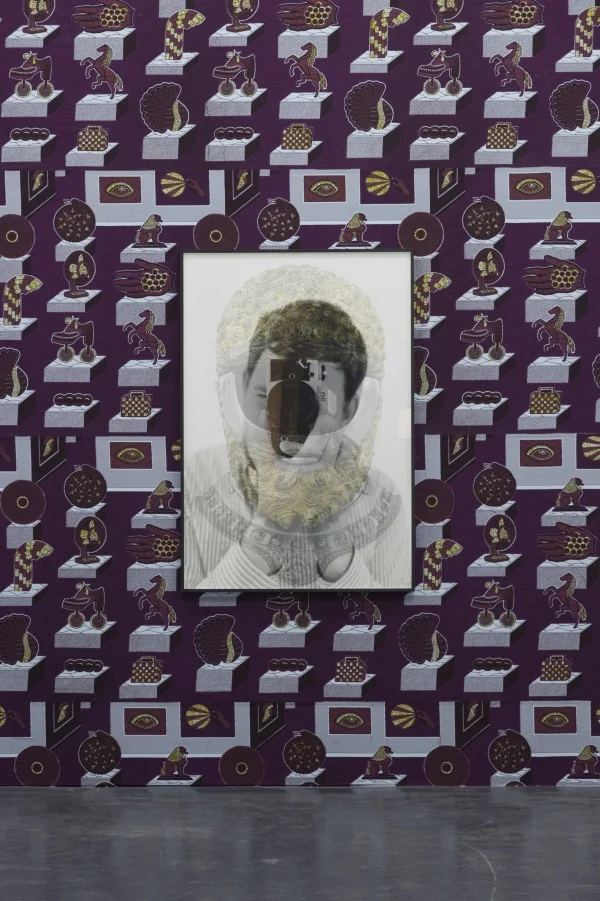

“Ocean tides raised by the Moon put brakes on the Earth’s rotation, slowing the spin at a gradual but unpredictable rate. The deceleration has been ongoing for aeons. At the present pace, compared to the length of a day in atomic time, today stretches 2.5 milliseconds longer than yesterday, and tomorrow will gain 2.5 milliseconds over today. These small daily increments add up to almost one second over the course of a year, but the precise tally rises or falls at the whim of other factors influencing the Earth’s rotation. The more the Earth slows down in future, the more frequently a leap second will intervene in our affairs. They might come as often as quarterly by the year 2250, and then monthly by 2600.”
Thinking again of Cocteau’s Orpheus
“John Archibald Wheeler, the visionary Princeton physicist who was Bohr’s disciple, once pointed out that the future and the past are theory. They exist only in records and the thoughts of the present, a fulcrum, in which all stories end and begin.
A single moment of insight or beauty or grace — like hitting a perfect towering drive off the eighth tee — can illuminate eternity.
It all depends on how you look at it.
”
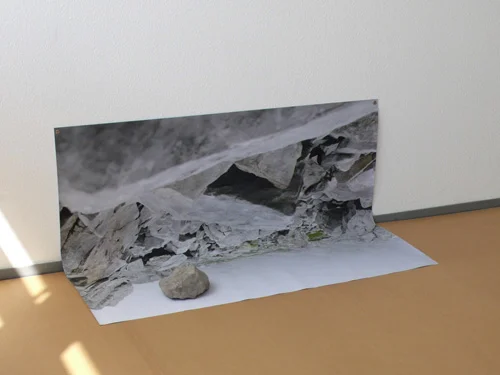
Helen Mirra
Rock Mind (fog)
2009
color photograph, rock
54 x 135 x 54 cm

Brent Wadden
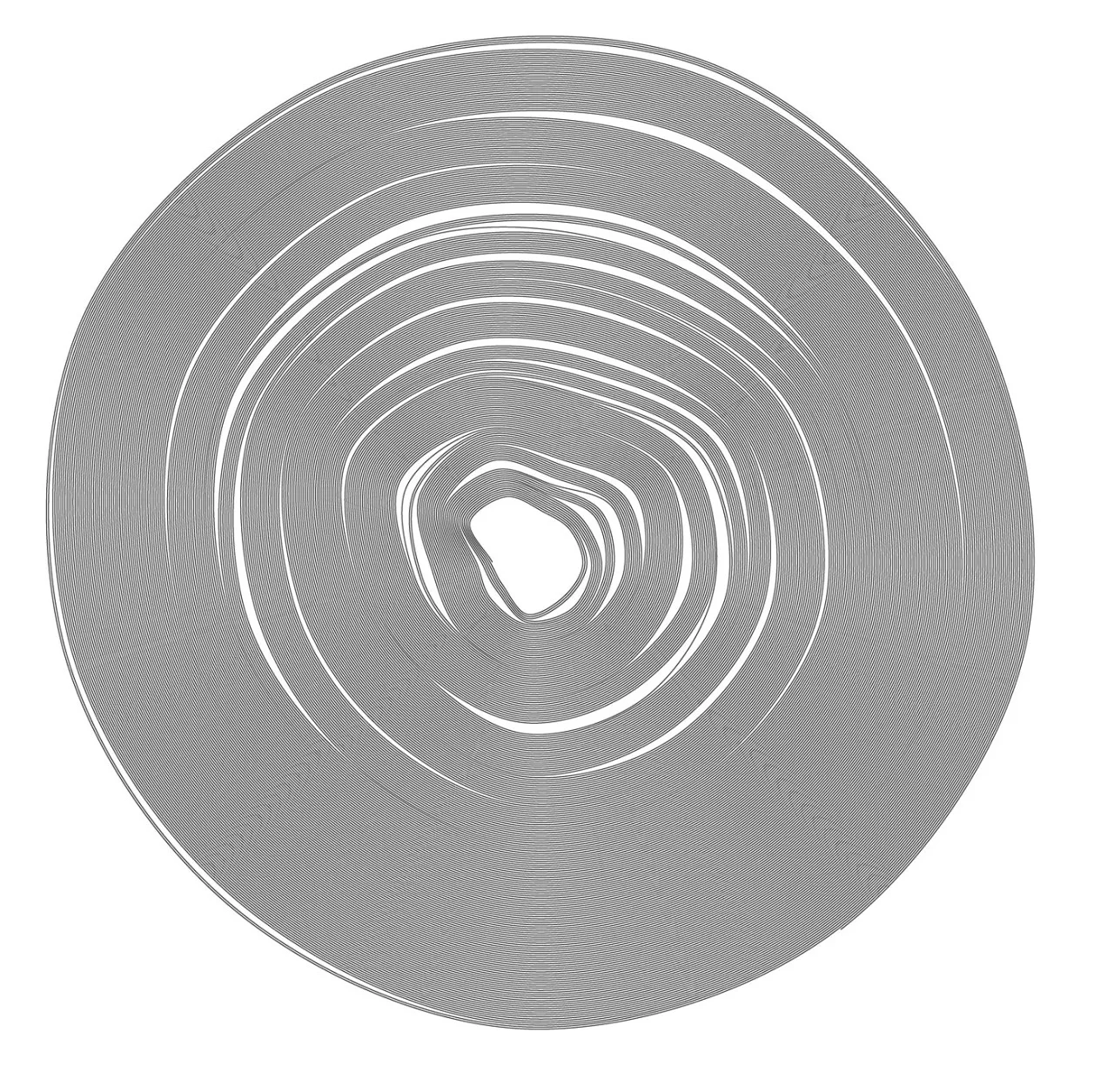
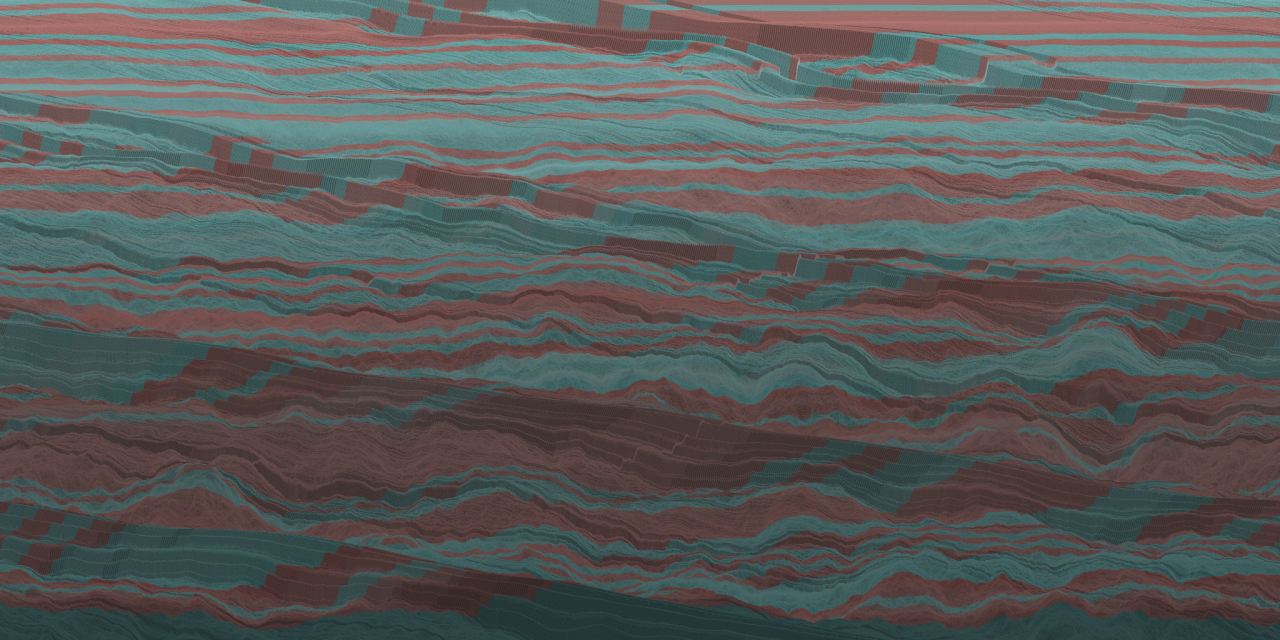
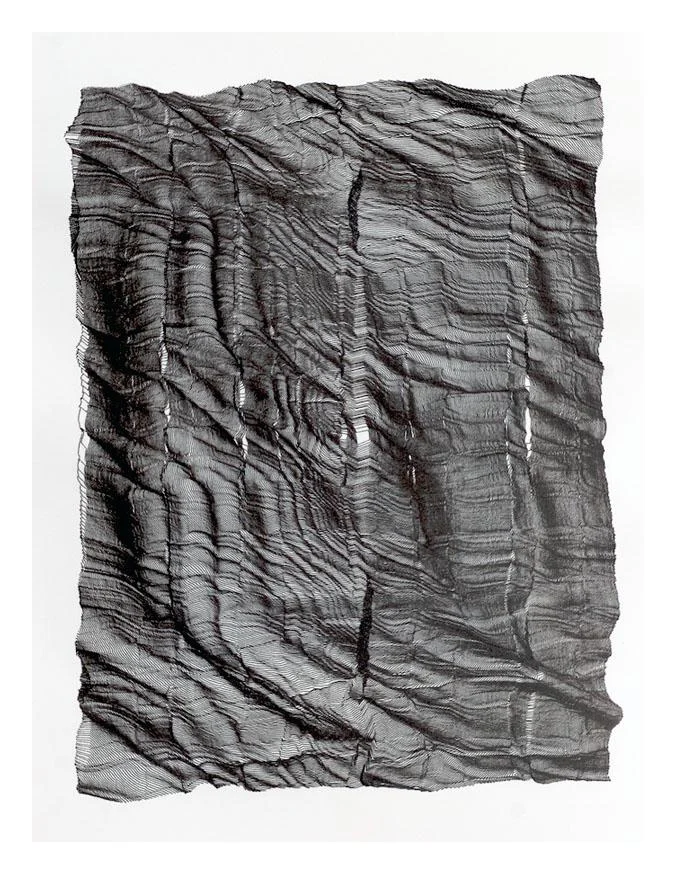
Drawing with Code: Works from the Anne and Michael Spalter Collection →
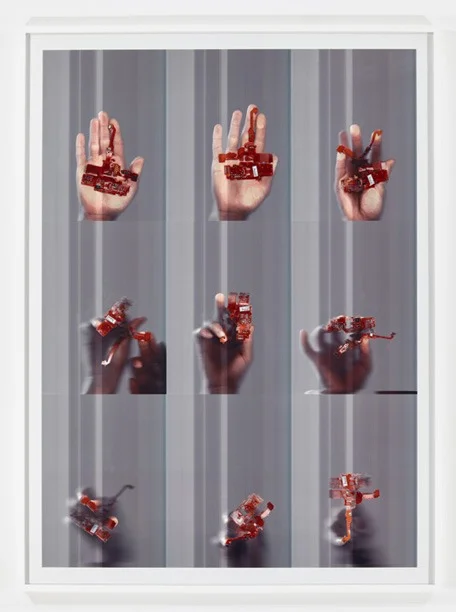
Sam Lewitt