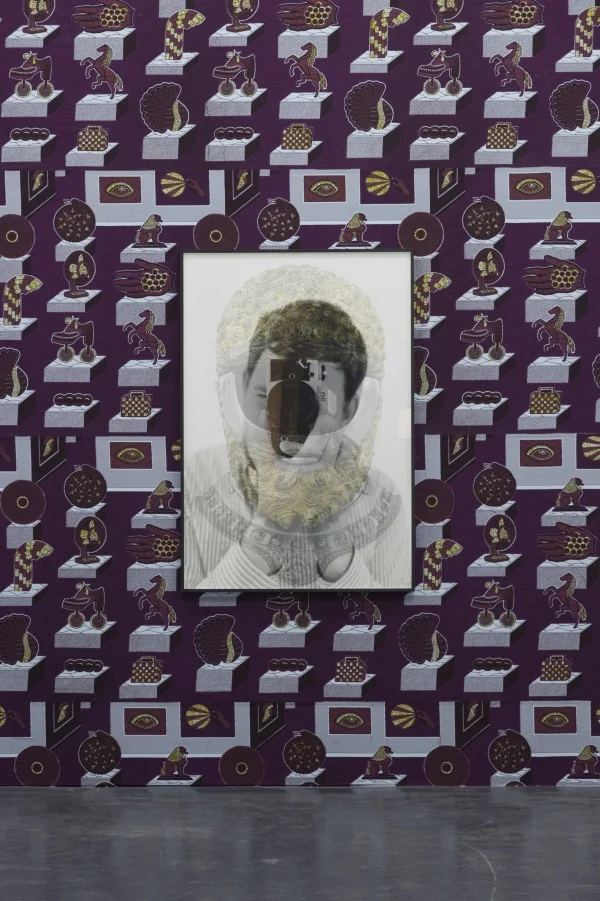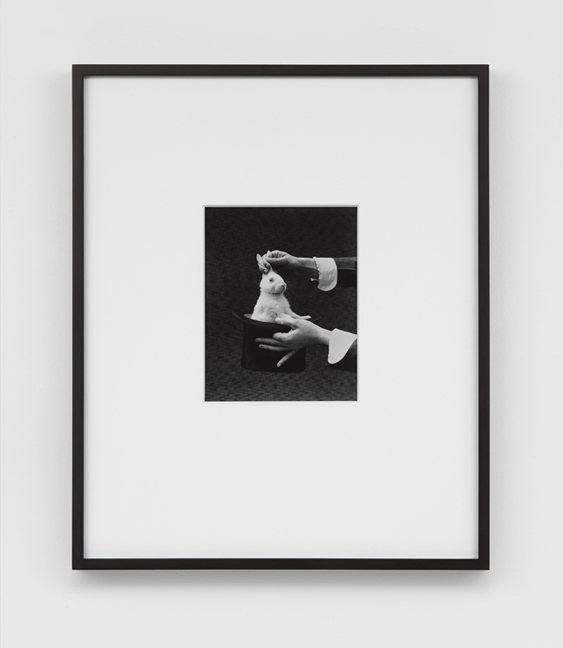
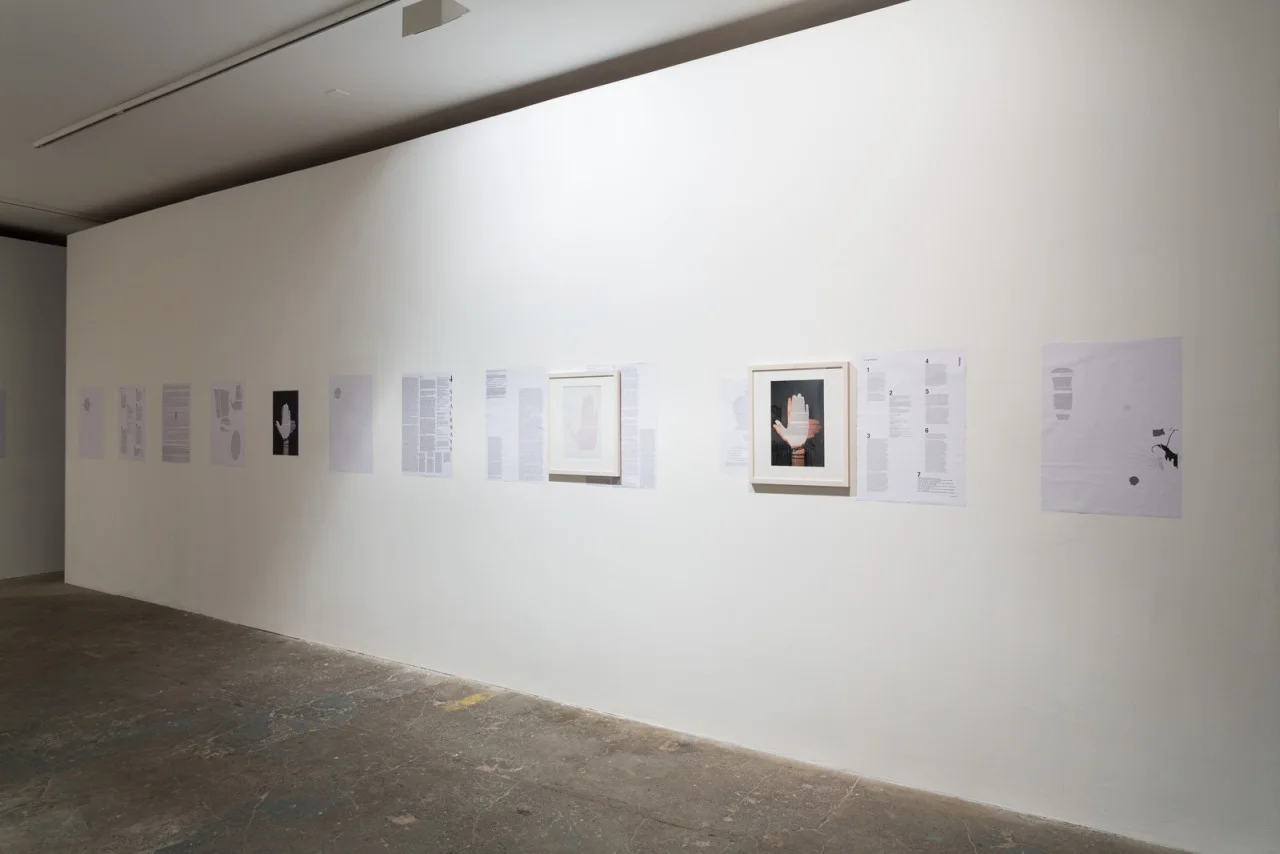


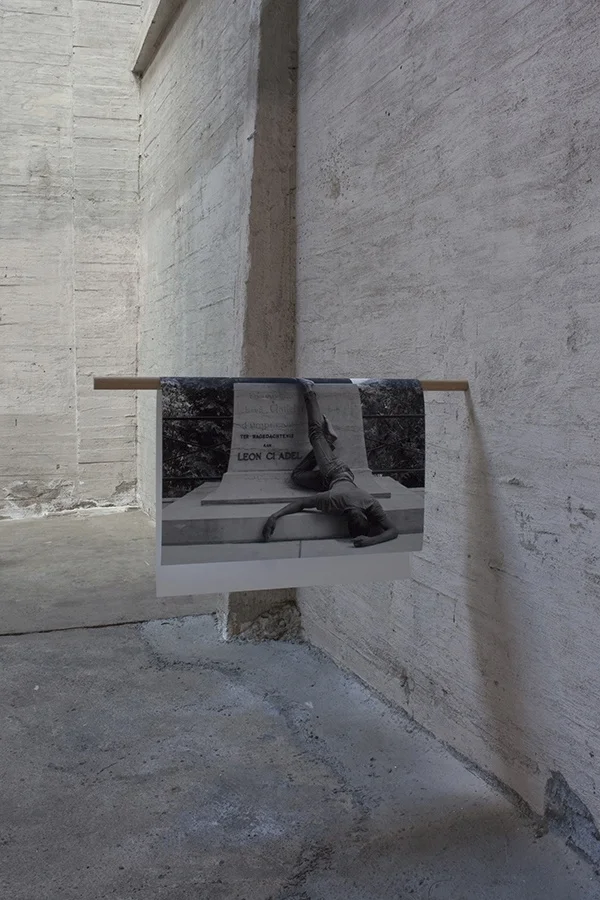
Falling or Jumping, 2011 by Ruth Proctor
“Music and literature were deeply important to Kolmogorov, who believed he could analyze them probabilistically to gain insight into the inner workings of the human mind. He was a cultural elitist who believed in a hierarchy of artistic values. At the pinnacle were the writings of Goethe, Pushkin, and Thomas Mann, alongside the compositions of Bach, Vivaldi, Mozart, and Beethoven—works whose enduring value resembled eternal mathematical truths. Kolmogorov stressed that every true work of art was a unique creation, something unlikely by definition, something outside the realm of simple statistical regularity. “Is it possible to include [Tolstoy’s War and Peace] in a reasonable way into the set of ‘all possible novels’ and further to postulate the existence of a certain probability distribution in this set?” he asked, sarcastically, in a 1965 article.”
nautil.us
Josef Strau
Installation view of My Divid'ed House at Vilma Gold
“0= 1-1
What might it represent? That 1 and -1 add up to zero, of course.
But that is interesting. Picture the reverse of the process: not 1 and -1 coming together to make 0, but 0 peeling apart, as it were, into 1 and -1. Where once you had Nothing, now you have two Somethings! Opposites of some kind, evidently. Positive and negative energy. Matter and antimatter. Yin and yang.
Even more suggestively, -1 might be thought of as the same entity as 1, only moving backward in time. This is the interpretation seized on by the Oxford chemist (and outspoken atheist) Peter Atkins. “Opposites,” he writes, “are distinguished by their direction of travel in time.” In the absence of time, -1 and 1 cancel; they coalesce into zero. Time allows the two opposites to peel apart-and it is this peeling apart that, in turn, marks the emergence of time. It was thus, Atkins proposes, that the spontaneous creation of the universe got under way.
”
Sreshta Rit Premnath
Toners, Dyes, 2011
acrylic paint and inkjet print on mirrored mylar, 5 parts, each 213 x 61 cm
“On one hand, I got seduced by it at an early age because it’s so elegant, this infinite hierarchy of infinites. On the other hand, I think that it’s not real in the sense that I don’t think that there’s anything truly infinite in our physical world.
Moreover, assuming the infinite has caused many of the worst problems in physics right now. One of the biggest problems we have in cosmology is called the measure problem, which prevents us from predicting anything rigorously. It comes from the assumption that space can be stretched out ad infinitum. Space is truly continuous. If that were really true, to even measure the distance between two points, you would need to write out a real number like 5.732… with infinitely many decimals, yet we’ve never measured any number better than 17 decimals. That’s a pretty far cry from infinity!
Most of the stuff I teach at MIT which assumes infinity we even know is wrong. When I calculate why it is that you can hear me by using the equation for sound waves, it assumes that air is continuous, that at infinitely many points in the air there is this pressure you can measure there. But we know it’s wrong because air is made of atoms. It’s much more convenient to make that continuum approximation than to deal with all those pesky atoms.
My guess is that we will ultimately discover some other mathematical description of the Universe which is infinity-free and find that all this infinite math that we’re using today is just a really convenient approximation.
”
Shannon Ebner
“Naturalness is a temporal illusion: like seasons, things seem static because we don’t notice them changing, and when they do change, there is a rough predictability to the way they do so. Horror and disgust arise whenever that neat aesthetic frame breaks.”
“Because language is an arbitrary system of negative difference, there is no sign that stands somehow outside the system to guarantee the meaning and stability of the other signs. This means language is infinite, in the strong sense that we can never fully account for its meanings or effects. It also means that meaning depends upon meaninglessness. And that language as a system is not a thing, not an object, but a strange infinite network without inside or outside. The process that makes signs manifest as appearance and meaning is différance: the process of difference (synchronic) and deferment (diachronic). The meaning of a word is another word, and strings of signs only gain significance retroactively. The meaning of a sentence is a moving target. You will never be able to know exactly when the end of this sentence is until after you’ve read it elephant.”
Jimmy Robert
déjà vu
Two quoted anecdotes, written originally in Borges’ 1928 “Language of the Argentines”, appearing here from “A History of Eternity” (1936) translated by Esther Allen and “A New Refutation of Time” (1944-47) translated by Suzanne Jill Levine.
—-
I wish to record an experience I had a few nights ago: a triviality too evanescent and ecstatic to be called an adventure, too irrational and sentimental for thought. It was a scene and its word: a word I had spoken but had not fully lived with all my being until then. I will recount its history and the accidents of time and place that revealed it to me.
I remember it thus: On the afternoon before that night, I was in Barracas, an area I do not customarily visit, and whose distance from the places I later passed through had already given the day a strange savor. The night had no objective whatsoever; the weather was clear, and so, after dinner, I went out to walk and remember. I did not want to establish any particular direction for my stroll: I strove for a maximum latitude of possibility so as not to fatigue my expectant mind with the obligatory foresight of a particular path. I accomplished, to the unsatisfactory degree to which it is possible, what is called strolling at random, without other conscious resolve than to pass up the avenues and broad streets in favor of chance’s more obscure invitations. Yet a kind of familiar gravitation pushed me toward neighborhoods whose name I wish always to remember, places that fill my heart with reverence. I am not alluding to my own neighborhood, the precise circumference of my childhood, but to its still mysterious outskirts; a frontier region I have possessed fully in words and very little in reality, at once adjacent and mythical. These penultimate streets are, for me, the opposite of what is familiar, its other face, almost as unknown as the buried foundations of our house or our own invisible skeleton. The walk left me at a street corner. I took in the night, in perfect, serene respite from thought. The vision before me, not at all complex to begin with, seemed further simplified by my fatigue. Its very ordinariness made it unreal. It was a street of one-story houses, and though its first meaning was poverty, its second was certainly bliss. It was the poorest and most beautiful thing. The houses faced away from the street; a fig tree merged into shadow over the blunted street corner, and the narrow portals—higher than the extending lines of the walls—seemed wrought of the same infinite substance as the night. The sidewalk was embanked above a street of elemental dirt, the dirt of a still unconquered America. In the distance, the road, by then a country lane, crumbled into the Maldonado River. Against the muddy, chaotic earth, a low, rose-colored wall seemed not to harbor the moonlight but to shimmer with a gleam all its own. Tenderness could have no better name than that rose color.
I stood there looking at this simplicity. I thought, undoubtedly aloud: “This is the same as it was thirty years ago.” I imagined that date: recent enough in other countries, but already remote on this everchanging side of the world. Perhaps a bird was singing and I felt for it a small, bird-sized fondness; but there was probably no other sound in the dizzying silence except for the equally timeless noise of crickets. The glib thought I am in the year eighteen hundred and something ceased to be a few approximate words and deepened into reality. I felt as the dead feel, I felt myself to be an abstract observer of the world: an indefinite fear imbued with knowledge that is the greatest clarity of metaphysics. No, I did not believe I had made my way upstream on the presumptive waters of Time. Rather, I suspected myself to be in possession of the reticent or absent meaning of the inconceivable word eternity. Only later did I succeed in defining this figment of my imagination.
I write it out now: This pure representation of homogenous facts—the serenity of the night, the translucent little wall, the small-town scent of honeysuckle, the fundamental dirt—is not merely identical to what existed on that corner many years ago; it is, without superficial resemblances or repetitions, the same. When we can feel this oneness, time is a delusion which the indifference and inseparability of a moment from its apparent yesterday and from its apparent today suffice to disintegrate.
The number of such human moments is clearly not infinite. The elemental experiences—physical suffering and physical pleasure, falling asleep, listening to a piece of music, feeling great intensity or great apathy—are even more impersonal. I derive, in advance, this conclusion: life is too impoverished not to be immortal. But we lack even the certainty of our own poverty, given that time, which is easily refutable by the senses, is not so easily refuted by the intellect, from whose essence the concept of succession appears inseparable. Let there remain, then, the glimpse of an idea in an emotional anecdote, and, in the acknowledged irresolution of this page, the true moment of ecstasy and the possible intimation of eternity which that night did not hoard from me.
—-
I wish to record here an experience I had some nights ago, a trifling matter too evanescent and ecstatic to be called an adventure, too irrational and sentimental to be called a thought. I am speaking of a scene and its word, a word I had said before but had not lived with total involvement until that night. I shall describe it now, with the incidents of time and place that happened to reveal it. This is how I remember it: I had spent the afternoon in Barracas, a place I rarely visited, a place whose distance from the scene of my later wanderings lent a strange aura to that day. As I had nothing to do that night and the weather was fair, I went out after dinner to walk and remember. I had no wish to have a set destination; I followed a random course, as much as possible; I accepted, with no conscious anticipation other than avoiding the avenues or wide streets, the most obscure invitations of chance. A kind of familiar gravitation, however, drew me toward places whose name I shall always remember, for they arouse in me a certain reverence. I am not speaking of the specific surroundings of my childhood, my own neighborhood, but of its still mysterious borders, which I have possessed in words but little in reality, a zone that is familiar and mythological at the same time. The opposite of the known—its reverse side—are those streets to me, almost as completely hidden as the buried foundation of our house or our invisible skeleton. My walk brought me to a corner. I breathed the night, in peaceful respite from thought. The vision before me, in no way complicated, in any case seemed simplified by my fatigue. It was so typical that it seemed unreal. It was a street of low houses, and although the first impression was poverty, the second was undoubtedly joyous. The street was both very poor and very lovely. No house stood out on the street; a fig tree cast a shadow over a corner wall; the street doors—higher than the lines extending along the walls—seemed made of the same infinite substance as the night. The sidewalk sloped up the street, a street of elemental clay, the clay of a still unconquered America. Farther away, the narrow street dwindled into the pampa, toward Maldonado. Over the muddy, chaotic earth a red pink wall seemed not to harbor moonglow but to shed a light of its own. There is probably no better way to name tenderness than that red pink.
I stood looking at that simple scene. I thought, no doubt aloud: “This is the same as it was thirty years ago….” I guessed at the date: a recent time in other countries, but already remote in this changing part of the world. Perhaps a bird was singing and I felt for him a small, bird-size affection; but most probably the only noise in this vertiginous silence was the equally timeless sound of the crickets. The easy thought I am somewhere in the 1800s ceased to be a few careless words and became profoundly real. I felt dead, I felt I was an abstract perceiver of the world, struck by an undefined fear imbued with science, or the supreme clarity of metaphysics. No, I did not believe I had traversed the presumed waters of Time; rather I suspected that I possessed the reticent or absent meaning of the inconceivable word eternity. Only later was I able to define these imaginings.
Now I shall transcribe it thus: that pure representation of homogeneous facts—- calm night, limpid wall, rural scent of honeysuckle, elemental clay—is not merely identical to the scene on that corner so many years ago; it is, without similarities or repetitions, the same. If we can intuit that sameness, time is a delusion: the impartiality and inseparability of one moment of time’s apparent yesterday and another of time’s apparent today are enough to make it disintegrate.
It is evident that the number of these human moments is not infinite. The basic elemental moments are even more impersonal—physical suffering and physical pleasure, the approach of sleep, listening to a single piece of music, moments of great intensity or great dejection. I have reached, in advance, the following conclusion: life is too impoverished not to be also immortal. But we do not even possess the certainty of our poverty, inasmuch as time, easily denied by the senses, is not so easily denied by the intellect, from whose essence the concept of succession seems inseparable. So then, let my glimpse of an idea remain as an emotional anecdote; let the real moment of ecstasy and the possible insinuation of eternity which that night lavished on me, remain confined to this sheet of paper, openly unresolved.
“PP”: [“For”, “From”, “after”, “as”, “at”, “before”, “by”, “for”, “from”, “in”, “into”, “like”, “of”, “to”], “DATE”: [“change”, “circle”, “configuration”, “cube”, “discovered”, “extruded”, “form”, “hexagon”, “nonagon”, “paraboloid”, “sameness”, “sure”, “synchronicity”, “yet”], “MONEY”: [“correct”], “PERCENT”: [“: nonagon”], “VP”: [“Looking”, “Morphing”, “appear”, “appears”, “appears to contain”, “are parsed and delineated”, “are synchronized”, “are widely varying”, “becomes”, “being extruded”, “blend”, “create”, “ebb”, “exists”, “have blended turning”, “have happened”, “hold”, “is”, “is correct”, “is emerging”, “is still defined”, “lacks”, “maintain”, “multiplying”, “paraboloid”, “seem”, “seem to change”, “seems”, “sees”, “stretched”, “stretching”, “to be discovered”, “to form”, “to think”, “turns”, “watching”, “would have happened”], “PERSON”: [“forms”, “forwards”], “DURATION”: [“form”, “several repetitions”, “stretched”, “structure exists”], “CARDINAL”: [“one”, “s”, “simultaneously”], “LOCATION”: [“A”, “An”, “Distortions”, “Initially”, “It”, “Looking”, “Morphing”, “Some”, “Still”, “The”, “There”, “They”, “Which”, “before”, “circle”, “closer”, “course”, “cube”, “form”, “happened”, “however”, “hypercube”, “infinity”, “line”, “once”, “particles”, “space”, “waves”], “MEASURE”: [“– texture”, “neighbor \u2019 s lines”], “NP”: [“– texture”, “A fact”, “A square”, “An identical structure”, “Distortions”, “I”, “It”, “Some structures”, “The articulation”, “There”, “They”, “Which”, “a circle”, “a cube”, “a hexagon”, “a hypercube”, “a line”, “a return”, “a sameness”, “a scaffolding”, “a scaffolding made”, “a series”, “a simple circle”, “a simpler configuration”, “a square”, “all”, “all configurations”, “all together and all”, “an infinity”, “another form”, “backwards”, “change”, “course”, “descriptions”, “difference”, “each”, “ebb”, “first”, “flat”, “flow”, “form”, “forms”, “forwards”, “it”, “its pristine fractal form”, “itself”, “lines”, “m sure”, “mark”, “most”, “movement”, “no discernible rhythm”, “no order”, “nonagon”, “nothing”, “one form”, “other instances”, “particles”, “repeating forms”, “s lines”, “s neighbor”, “several repetitions”, “shift”, “small lines”, “some surface”, “space”, “sure”, “synchronicity”, “texture”, “that”, “the”, “the changing forms”, “the constellation”, “the coordinates”, “the form”, “the individual forms”, “the limitations”, “the original”, “the outside they”, “the perspective”, “the possibility”, “the previous cube”, “the”, “there”, “these figures”, “they”, “they blend”, “this time”, “waves”, “what”], “ORGANIZATION”: [“fact”, “form”, “original”]}
“For every language there is a frontier, the crossing of which is strictly prohibited by that language’s implicit set of injunctions, yet the frontier is frequently crossed. Such an act of crossing entails a paradox. On the one hand, language’s very existence is predicated on the impossibility of saying everything (the existence of grammar implies the existence of nongrammar, consequently, there is an implied exclusion: “This cannot be said”). On the other hand, there is nothing that cannot be said—that is, nothing need necessarily be left unsaid, for there is hardly a rule one does not eventually break, either intentionally or unknowingly. In another manner of speaking, there are no explicit rules for what can be said outside the rules (i.e., you cannot speak about what cannot be said, at most you might be able to say it, otherwise you are consigned to silence; but if it is said, then some implied rule, or nonrule as it were, has been broken). Borges is, as to an extent we all are, trapped within such a quandary: to describe the ineffable Aleph, Tzinacan’s effort in “The God’s Script” to narrate his mystical experience, to discover the key to Ts’ui Pen’s labyrinthine book, Averroes’s problem in understanding Aristotle’s Poetics, whether or not the Library possesses any sort of order, and so on.”
“Borges himself refers to Blanqui in his 1936 essay ‘A History of Eternity’. For Borges, Blanqui’s vision is heavenly — like the archive he describes in his short story ‘The Library of Babel’ (1941), a building that contains every possible book among its randomly generated texts. What Borges never considered in his story is how many millions of light years any poor soul would need to travel in order to find as much as a page worth reading. To any real inhabitant, the library would be indistinguishable from chaos, and it is only from the lofty vantage point of literary contemplation that the place assumes order.”
Causal dynamical triangulations
“3:AM: So one of the big issues in science and metaphysics that you have looked hard at is time and implications running from different conceptions of time. There are several philosophically interesting and paradoxical seeming things about time. McTaggart‘s arguments about the unreality of time is a pretty cool argument. He basically argues that time doesn’t exist because the past doesn’t exist because it’s finished, the future doesn’t exist because it hasn’t happened yet and the present doesn’t exist because to understand the present you have to relativise it to the past and the future. Given that they don’t exist time doesn’t exist. You have recently asked the question whether time is an illusion. So is it? If not, what is it and what isn’t it?
Craig Callender: We all seem to possess a kind of proto-theory of time. Let’s call it manifest time. Manifest time says that time has a global, shared present that is metaphysically distinguished. This present carves the world into three, a past, a present and a future. This present flows. It is intrinsically directed. It is independent of the distribution of matter. And so on. No matter how scientifically literate, I bet the reader shares this theory. Think of how important this conception of the world is to you! The way you live your life depends crucially on it. What you take yourself to cause, know, your very freedom and sense of self are all bound up with this conception of the world. Manifest time really is, as the philosopher Mellor calls it, the time of our lives.
Yet physics tells us that this picture is more or less complete rubbish. I believe that. That is, I don’t think, merely by sifting through the physics, you’ll be able to recover manifest time.
Does that mean that physical time is inaccurate or incomplete? No, physical time may be all the time we need, fundamentally. However, it may be that by looking at more than physics we can explain why a creature embedded in a physical world such as ours would conceive of the world as we do in terms of manifest time. That is, I think that we can show why manifest time makes sense for creatures like us. I talk more about this project of getting from physical time to manifest time in the book I’m currently writing. The idea is that physics provides important constraints on any being like us, and these constraints, in concert with our psychological mechanisms, means of communication, macroscopic environments, and senses of selves, all together explain why we conceive of the world in terms of manifest time.
Is manifest time an illusion? In one sense, yes: manifest time is not accurately representing physical time. But there is a sense in which a world without perceivers lacks colors; only when perceivers are around do colors obtain. (Alternatively, maybe the colors exist as dispositions to look colored if an appropriately configured perceiver is present.) Either way, we don’t regard colors as illusions. Maybe some aspects of manifest time are like this, in which case we wouldn’t judge them as illusions. Embed a creature like us in a world like ours and that triggers a sense of flow, say. Once you break down manifest time into its various components, it becomes a bit tricky whether we ought to say its illusory. What I can say is that I don’t think manifest time maps onto the fundamental picture of time we have from physics.”