
• SELECTED PROJECTS
  • NEWS
  • NOTES
  • CV
  • CONTACT

Cody Trepte

  • SELECTED PROJECTS
  • NEWS
  • NOTES
  • CV
  • CONTACT
Christian Mayer

Christian Mayer

Source: http://www.contemporaryartdaily.com/2015/1...
Tuesday 12.22.15
Posted by Cody Trepte
 
B. Ingrid Olson

B. Ingrid Olson

Friday 10.16.15
Posted by Cody Trepte
 
Adam Fuss

Adam Fuss

Sunday 09.20.15
Posted by Cody Trepte
 
tumblr_nuy74qdQ0W1qbgkzxo1_1280.jpg
Saturday 09.19.15
Posted by Cody Trepte
 

The Connoisseur of Number Sequences | Quanta Magazine →

Saturday 09.19.15
Posted by Cody Trepte
 
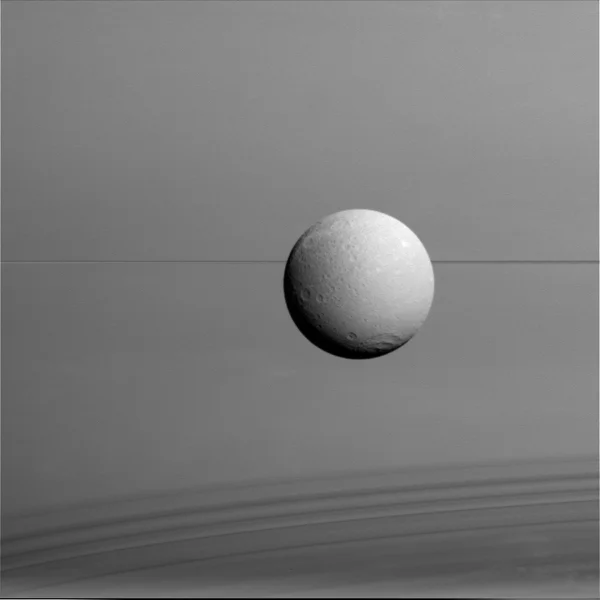
Saturn’s moon Dione

Saturn’s moon Dione

Sunday 08.23.15
Posted by Cody Trepte
 
Gaylen Gerber

Gaylen Gerber

Sunday 07.19.15
Posted by Cody Trepte
 
tumblr_nrmd5fQML21qbgkzxo1_1280.jpg
Thursday 07.16.15
Posted by Cody Trepte
 

Cookie-Cutter Holes

On Nov. 24, 1984, the Spokane, Wash., Spokesman-Review reported the discovery of a massive chunk of earth, 10 feet long by 7 feet wide, that had somehow been plucked from the ground and put down, right side up and intact, 73 feet away. Roots had been torn apart rather than cut, and, strangely, the debris between the hole and the slab traced an arc rather than a straight line.

“All we know for sure is that this puzzle piece of earth is 73 feet away from the hole it came out of,” said geologist Greg Behrens.

Similar “cookie-cutter holes” have been observed elsewhere; the earliest known reference is in the Royal Frankish Annals of the 8th century:

In the land of the Thuringians, in the neighborhood of a river, a block of earth fifty feet long, fourteen feet wide, and a foot and a half thick, was cut out, mysteriously lifted, and shifted twenty-five feet from its original location.

No doubt there’s a mundane explanation for this, but for now no one knows what it is.

Futility Closet

Sunday 05.10.15
Posted by Cody Trepte
 
When puzzling screw-shaped structures (below) were unearthed in Nebraska in the 1890s they were known as “devil’s corkscrews” and attributed to freshwater sponges or some sort of coiling plant. They were finally recognized as the burrows of prehis…

When puzzling screw-shaped structures (below) were unearthed in Nebraska in the 1890s they were known as “devil’s corkscrews” and attributed to freshwater sponges or some sort of coiling plant. They were finally recognized as the burrows of prehistoric beavers only when a fossilized specimen, Palaeocastor, was found inside one.

Futility Closet

Sunday 05.10.15
Posted by Cody Trepte
 
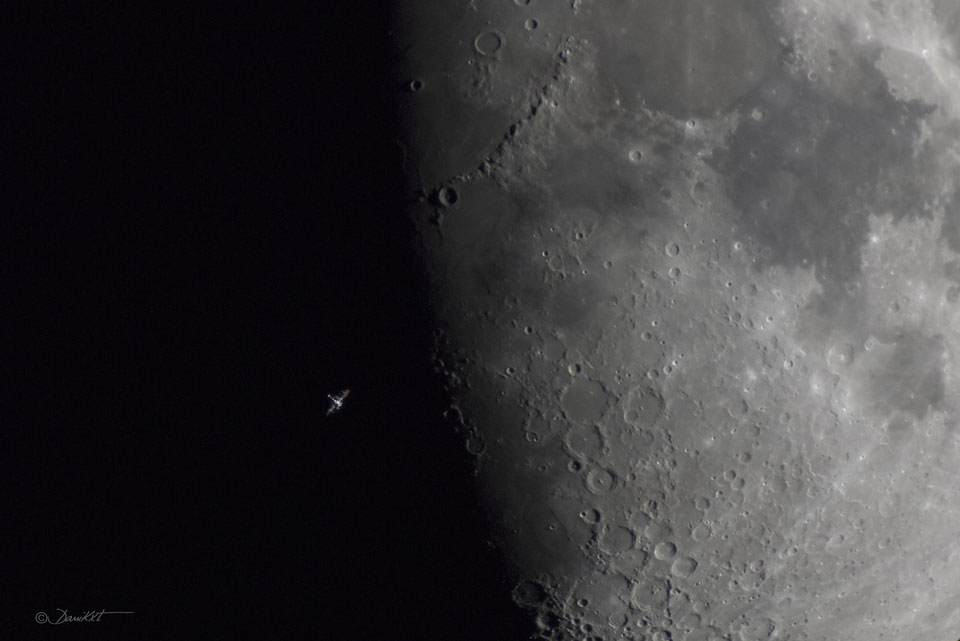
International Space Station in front of the moon

International Space Station in front of the moon

Sunday 05.10.15
Posted by Cody Trepte
 
Scotoma

Scotoma

Friday 12.26.14
Posted by Cody Trepte
 
Friday 12.26.14
Posted by Cody Trepte
 
Friday 12.26.14
Posted by Cody Trepte
 
tumblr_nfz4kwlCz01qbgkzxo1_1280.jpg
Tuesday 12.02.14
Posted by Cody Trepte
 
tumblr_nfz4luwOmq1qbgkzxo1_1280.jpg
Tuesday 12.02.14
Posted by Cody Trepte
 
“Nothing is lost in translation. Everything was always already lost, long before we arrived.

Translation is its own undoing. A feedback loop. A Möbius strip or trip. An unwriting of the original, which is never the same as itself anyway. A writing of the unoriginal translation.

Translation is an asymptote: no matter how close we try to get, there’s always a space between the two bodies and that is the space where we live. The space where we transpose, or are transposed.”
— A Manifesto for Ultratranslation from Antena
Sunday 11.23.14
Posted by Cody Trepte
 
Raphael Hefti at Nottingham Contemporary

Raphael Hefti at Nottingham Contemporary

Friday 11.21.14
Posted by Cody Trepte
 
comet 67P/Churyumov–Gerasimenko

comet 67P/Churyumov–Gerasimenko

Wednesday 11.12.14
Posted by Cody Trepte
 
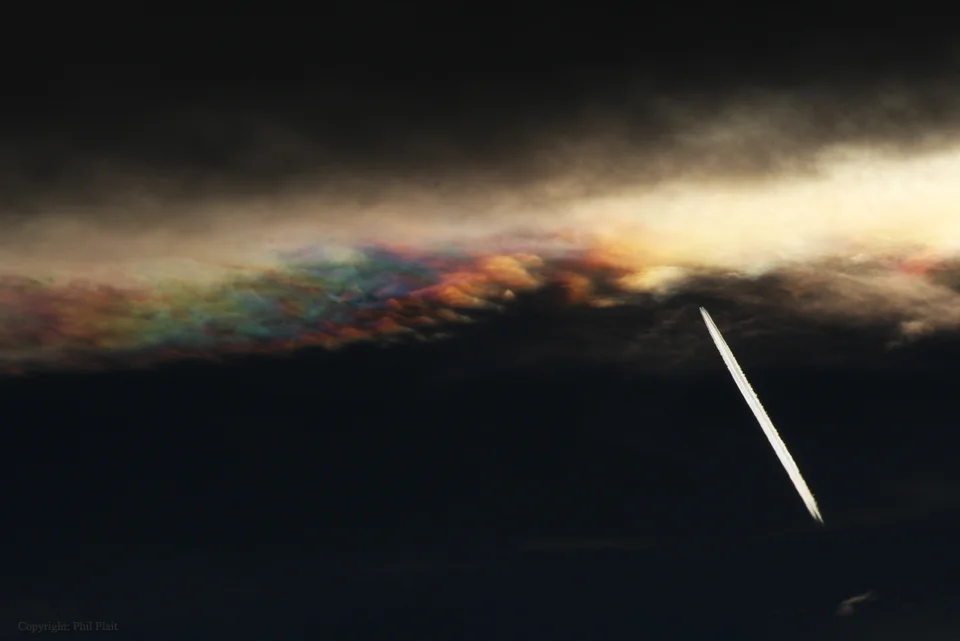
Sometimes your eclipse viewing goes bad in an interesting way. While watching and photographing last Thursday’s partial solar eclipse, a popular astronomy blogger suffered through long periods of clouds blocking the Sun. Unexpectedly, however,…

Sometimes your eclipse viewing goes bad in an interesting way. While watching and photographing last Thursday’s partial solar eclipse, a popular astronomy blogger suffered through long periods of clouds blocking the Sun. Unexpectedly, however, a nearby cloud began to show a rare effect: iridescence. Frequently part of a more familiar solarcorona effect, iridescence is the diffraction of sunlight around a thin screen of nearly uniformly-sized water droplets. Different colors of the sunlight become deflected by slightlydifferent angles and so come to the observer from slightly different directions. This display, featured here, was quite bright and exhibited an unusually broad range of colors. On the right, the contrails of an airplane are also visible.

from: APOD (NASA)

Thursday 10.30.14
Posted by Cody Trepte
 
Newer / Older