
“A proxy in one sense is a position: a stand-in, an agent, an avatar, a functionary, and I am acquainted with the office. I have been stepson, house sitter, replacement faculty, liaison, trustee, interim director, secretary, adjunct, sub, temp, warm body, and for a short while acting editor of The Prostate–I still have the letterhead. Whose office is this? is a deputy’s question to answer, a tricky one, and also On whose behalf; on what authority do you have it?
In sciences I think proxy additionally expresses a kind of concession to imprecision, a failure. It’s the word for a subject you choose to study to produce data that can approximate the data you’d get from the actual, desired subject, if it were not prohibitively hard to apprehend.
”
“We all see our lives as stories, it seems to me, and I am convinced that psychologists and sociologists and historians and so on would find it useful to acknowledge that. If a person survives an ordinary span of sixty years or more, there is every chance that his or her life as a shapely story has ended, and all that remains to be experienced is epilogue. Life is not over, but the story is.”
“The poor image is a copy in motion. Its quality is bad, its resolution substandard. As it accelerates, it deteriorates. It is a ghost of an image, a preview, a thumbnail, an errant idea, an itinerant image distributed for free, squeezed through slow digital connections, compressed, reproduced, ripped, remixed, as well as copied and pasted into other channels of distribution. …
The poor image is no longer about the real thing—the originary original. Instead, it is about its own real conditions of existence: about swarm circulation, digital dispersion, fractured and flexible temporalities. It is about defiance and appropriation just as it is about conformism and exploitation.”

Rule 90
You Can’t See Any Such Thing by Matt Sheridan Smith →
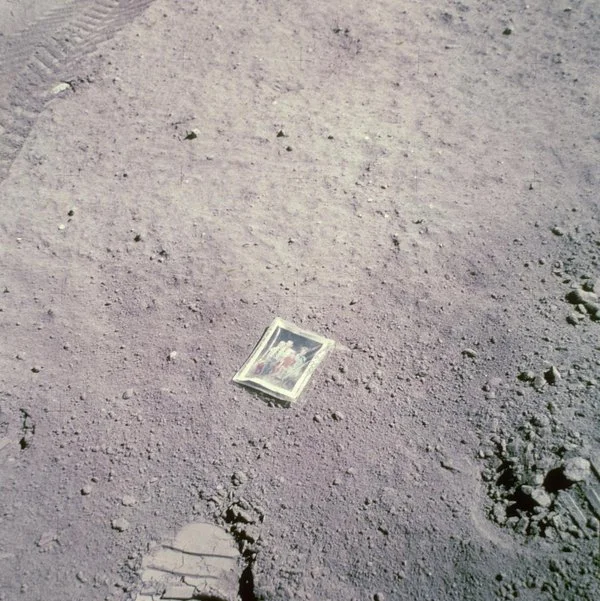

Christian Mayer

B. Ingrid Olson
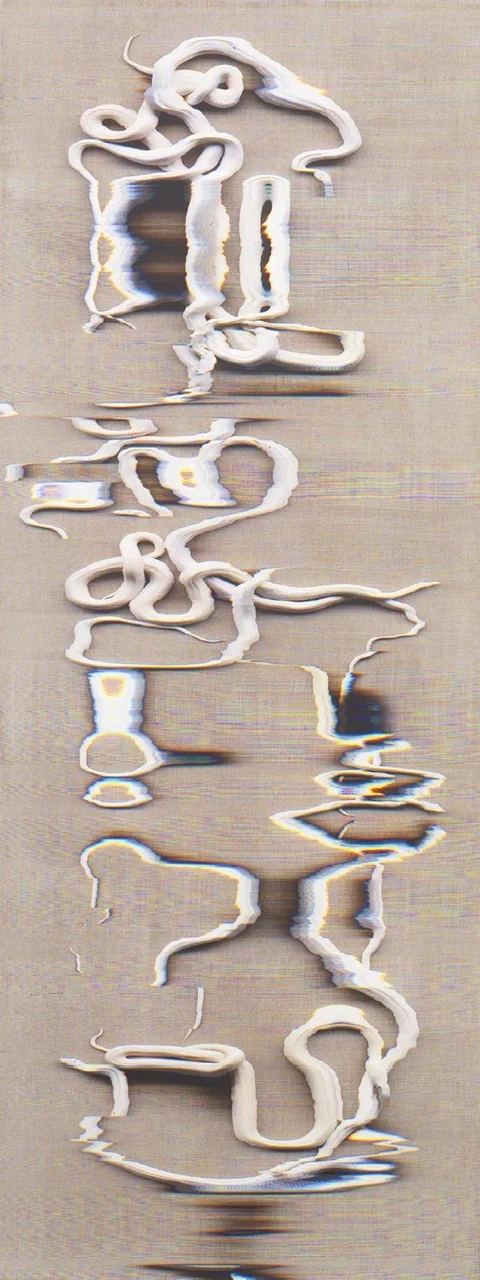
Adam Fuss

The Connoisseur of Number Sequences | Quanta Magazine →


Gaylen Gerber
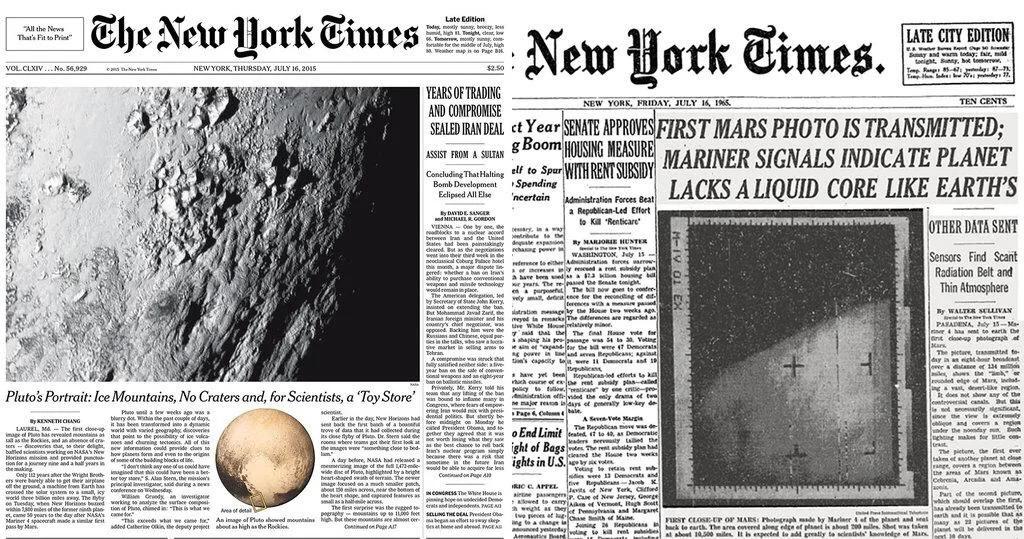
Cookie-Cutter Holes
On Nov. 24, 1984, the Spokane, Wash., Spokesman-Review reported the discovery of a massive chunk of earth, 10 feet long by 7 feet wide, that had somehow been plucked from the ground and put down, right side up and intact, 73 feet away. Roots had been torn apart rather than cut, and, strangely, the debris between the hole and the slab traced an arc rather than a straight line.
“All we know for sure is that this puzzle piece of earth is 73 feet away from the hole it came out of,” said geologist Greg Behrens.
Similar “cookie-cutter holes” have been observed elsewhere; the earliest known reference is in the Royal Frankish Annals of the 8th century:
In the land of the Thuringians, in the neighborhood of a river, a block of earth fifty feet long, fourteen feet wide, and a foot and a half thick, was cut out, mysteriously lifted, and shifted twenty-five feet from its original location.
No doubt there’s a mundane explanation for this, but for now no one knows what it is.

When puzzling screw-shaped structures (below) were unearthed in Nebraska in the 1890s they were known as “devil’s corkscrews” and attributed to freshwater sponges or some sort of coiling plant. They were finally recognized as the burrows of prehistoric beavers only when a fossilized specimen, Palaeocastor, was found inside one.
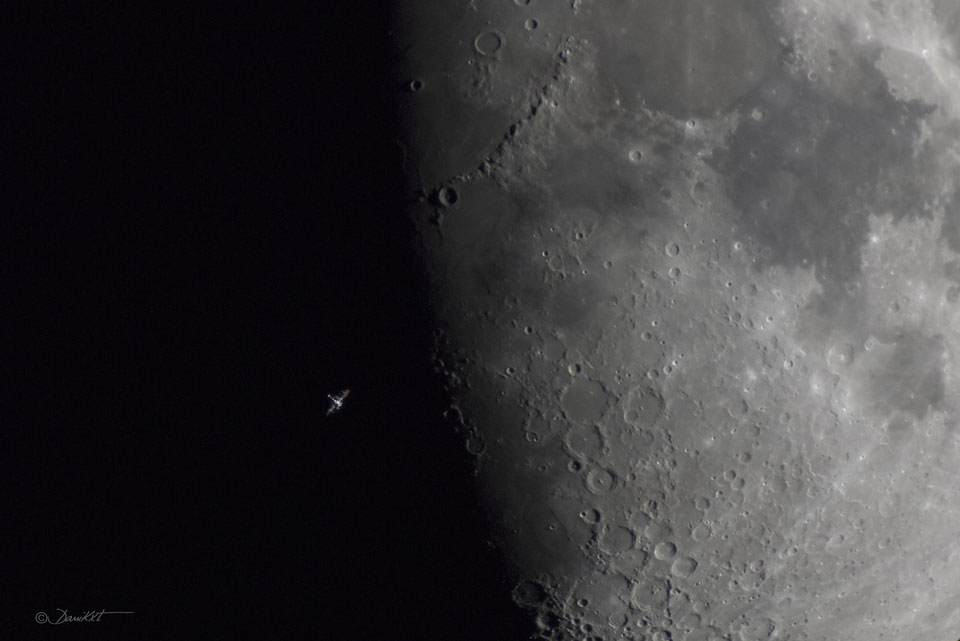
International Space Station in front of the moon
Scotoma